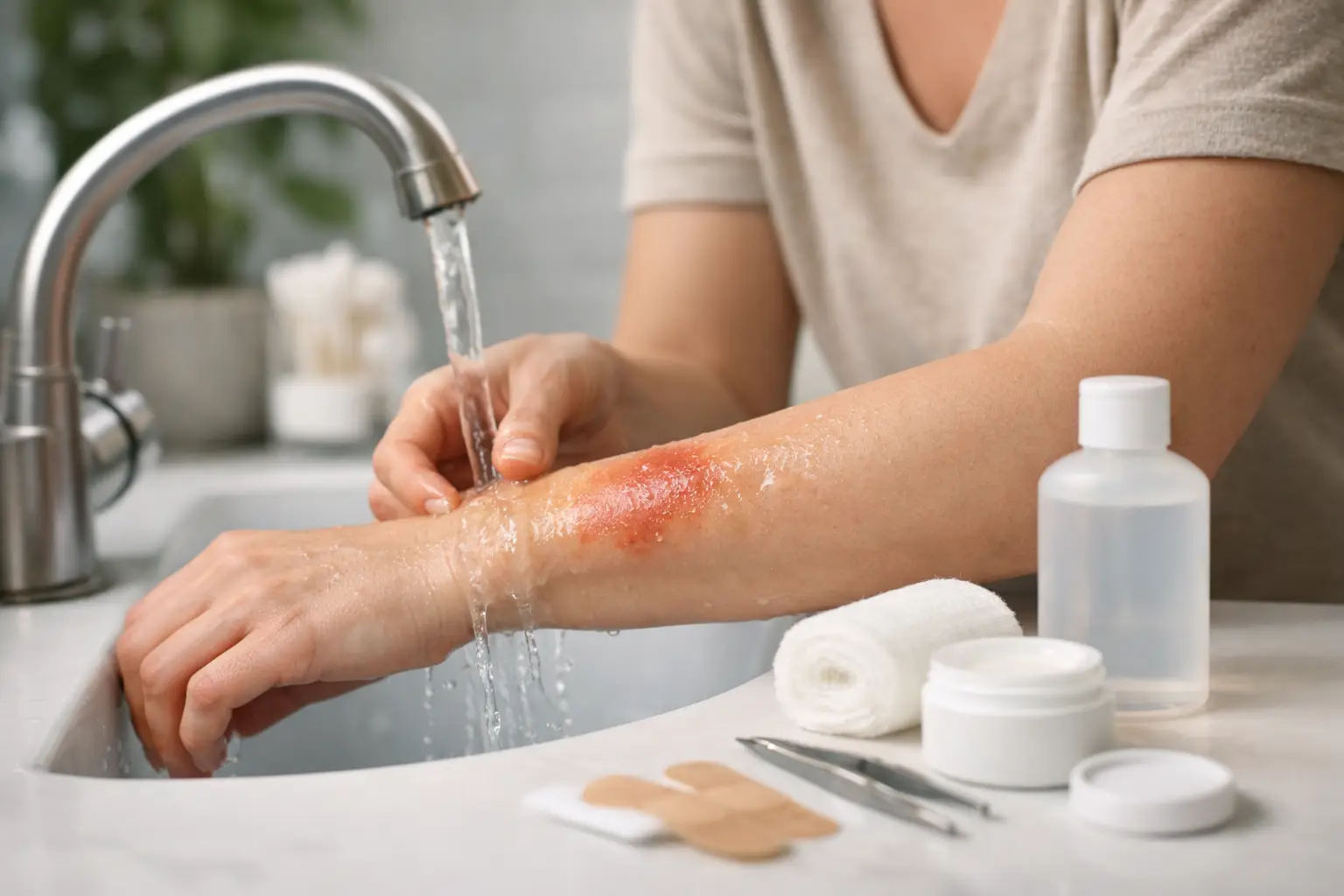
That pan handle you did not realize was hot, the splash of coffee on your wrist, the quick brush against a curling iron – minor burns happen fast. Knowing how to treat minor burns right away can limit pain, protect the skin, and lower the chance of infection or scarring.
The first few minutes matter more than most people think. Good first aid can help a small burn heal cleanly, while bad advice or delayed care can make a minor injury worse. If the burn is small and superficial, home treatment is often enough. If it is larger, deeper, or located in a sensitive area, urgent care is the better move.
How to treat minor burns in the first few minutes
Start by moving away from the heat source. If the burn came from hot liquid, steam, a hot surface, or a small flame, cool the area under running cool water for about 20 minutes. Cool water helps stop heat from continuing to damage the skin. It also helps reduce pain and swelling.
Use cool water, not ice or ice water. Ice can injure already damaged skin and may make the burn worse. If running water is not available, a clean cool compress can help until you can rinse the area properly.
If there is jewelry, a watch, or tight clothing near the burned area, remove it early before swelling starts. Be careful with anything stuck to the skin. If fabric has melted or adhered to the burn, do not pull it off at home.
After cooling the burn, gently pat it dry with a clean cloth. Then cover it loosely with a sterile nonstick bandage or clean dressing. The goal is simple: protect the skin without putting pressure on it.
For pain, over-the-counter medication such as ibuprofen or acetaminophen may help if you normally take those medicines safely. Follow the label directions. A thin layer of plain petroleum jelly can also help keep the area from drying out, but skip thick ointments with fragrance or extra ingredients unless a medical provider tells you otherwise.
What counts as a minor burn
A minor burn usually affects only the top layer of skin or a small area of the second layer. The skin may look red, feel sore, and be mildly swollen. Some minor burns also form small blisters.
In practical terms, a minor burn is generally small, not deep, and not located on a high-risk part of the body. A burn can seem minor at first and still need medical care later, especially if pain increases, blistering spreads, or the skin starts to look white, leathery, or numb.
A good rule is this: if the burn is limited in size and the person otherwise feels well, basic first aid may be reasonable. If there is any doubt about the burn depth, the cause, or the location, getting evaluated is the safer choice.
What not to put on a burn
A lot of people still reach for home remedies that do more harm than good. Butter, toothpaste, oils, and egg whites should stay out of burn care. These can trap heat, irritate the skin, and increase infection risk.
You should also avoid popping blisters. Blisters act as a natural barrier while the skin underneath heals. If one opens on its own, gently clean the area with mild soap and water, then apply a clean nonstick dressing.
Hydrogen peroxide and rubbing alcohol are not good choices either. They can be too harsh on healing tissue and may slow recovery. Gentle care works better than aggressive cleaning.
Caring for a minor burn over the next few days
Once the burn has been cooled and covered, daily care becomes the focus. Wash the area gently once or twice a day with mild soap and water. Reapply a thin layer of petroleum jelly if needed, and change the dressing if it gets wet, dirty, or stuck.
Pain should gradually improve over the first day or two. The skin may stay red and tender for several days, and mild peeling can happen as it heals. If a blister remains intact, try to protect it from friction. If the burn is on a hand, wrist, or another area you use often, a loose dressing can keep it from getting bumped.
Sun protection matters, too. Freshly healed skin is more likely to darken or discolor with sun exposure. Once the skin has closed, keep the area covered or use sunscreen if it will be exposed.
Healing time depends on the depth of the burn. A very mild burn may improve within a few days. A small blistering burn can take a couple of weeks. If it is not steadily improving, it deserves a closer look.
When a burn is not minor anymore
Some burns need medical attention from the start. Others begin as manageable injuries and become more concerning later. The location of the burn matters as much as the size.
You should seek prompt medical care if the burn involves the face, hands, feet, genitals, or a major joint. These areas are more sensitive and more likely to affect function during healing. Burns on young children, older adults, or people with diabetes or poor circulation also deserve extra caution.
The cause matters, too. Electrical burns, chemical burns, and smoke inhalation are not home-care situations, even if the skin injury looks small. These can cause deeper damage than you can see on the surface.
Fever, spreading redness, pus, bad odor, worsening pain, or red streaks can point to infection. A burn that turns white, charred, leathery, or numb may be deeper than it appears and should be evaluated right away.
When urgent care makes sense
Urgent care is a practical option for burns that are painful, blistering, or in a spot where healing may be harder to manage. It is also useful when you are not sure whether the burn is still minor. A same-day exam can help confirm burn depth, clean the wound properly, update tetanus protection if needed, and give you a clear treatment plan.
For many families and working adults, this is the middle ground that makes sense. You may not need an emergency room for a small kitchen or workplace burn, but you also may not want to guess at home care. Health First Urgent Care sees these everyday injuries and can help you decide what comes next.
In Richland, Kennewick, and Pasco, that kind of access matters on weekends, after work, and during the usual moments when injuries seem to happen.
Minor burns in children
Parents often ask whether a childs small burn can be treated at home. The answer depends on size, location, and the childs age. A small superficial burn on an arm or leg may respond well to cooling, gentle dressing, and close observation.
Still, children can dehydrate faster, may have a harder time describing pain, and can bump or scratch an injured area. If the burn blisters, covers a large area relative to the childs body, or involves the face or hands, it is smart to get medical care sooner rather than later.
A quick note about work injuries
Burns at work are common in food service, manufacturing, janitorial work, and skilled trades. Even when a burn looks minor, documentation and proper treatment can matter for return-to-work planning and safety follow-up.
If the injury happened on the job, it is worth getting clear guidance on wound care, work restrictions, and signs that the burn is not healing as expected. That is especially true for burns on the hands, since even a small injury can interfere with grip, glove use, or repetitive tasks.
The bottom line on how to treat minor burns
Cool the burn with running water, protect the skin with a clean nonstick cover, manage pain with simple measures, and avoid home remedies that trap heat or irritate the wound. Watch closely over the next several days. If the burn is deeper, larger, infected, or in a sensitive area, do not wait it out.
Most minor burns heal well with prompt, sensible care. When you are unsure, getting checked the same day is often the fastest way to prevent a small problem from turning into a longer recovery.