
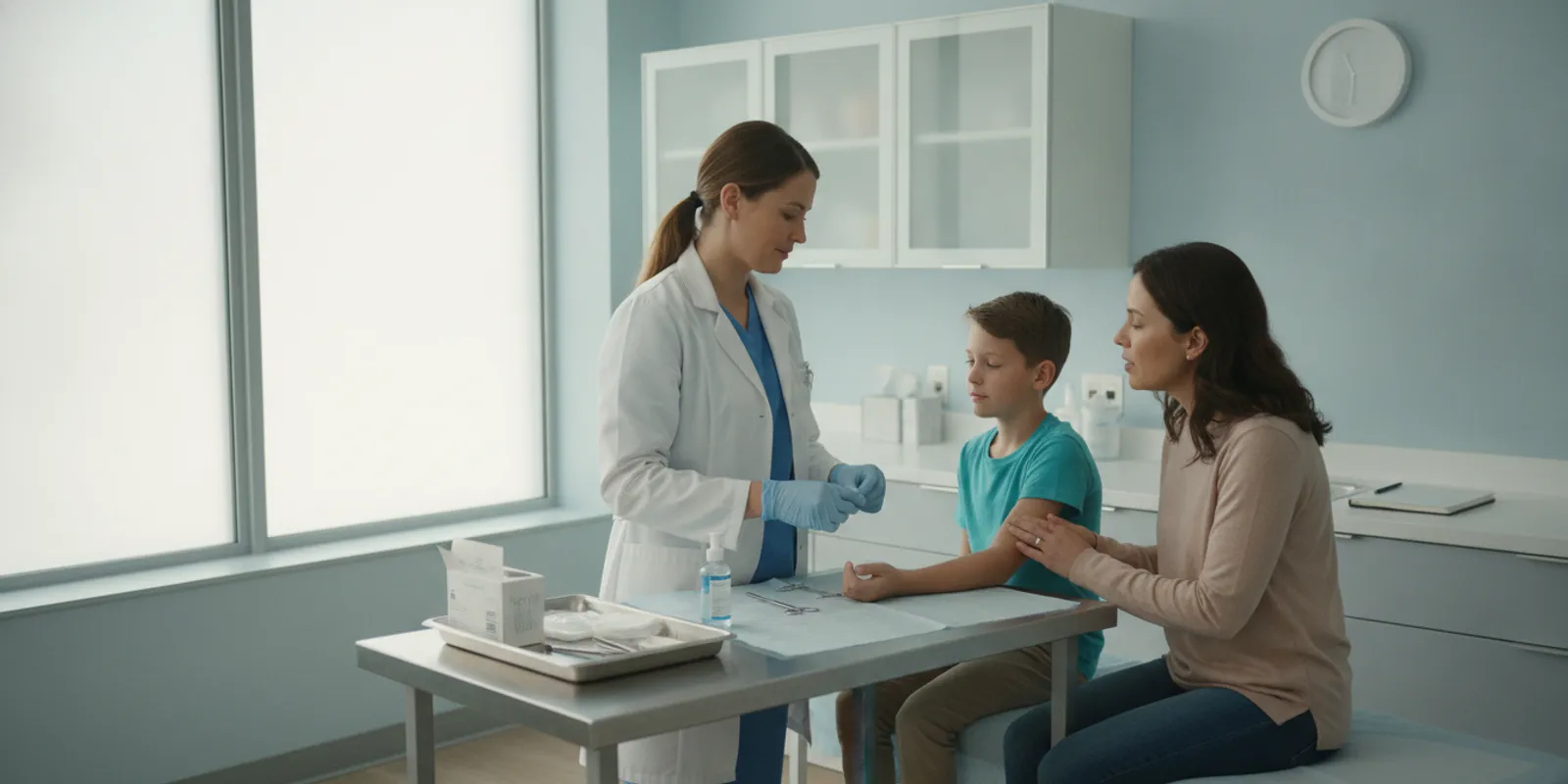
A splinter, small piece of debris, or another object in the skin, eye, ear, or nose can leave you wondering about urgent care foreign body removal cost. There is no single total for every visit. The amount can depend on where the object is, how deeply it is lodged, whether it can be seen clearly, what evaluation is needed, and whether supplies, testing, imaging, or follow-up are appropriate. A simple evaluation is not necessarily priced the same as a complicated removal.
This guide describes common billing questions and the limits of what a nonemergency urgent-care clinic may be able to do. It is general information, not a diagnosis or a promise that every foreign body can be removed at urgent care. Walk-in care is subject to availability. If you have a life-threatening symptom, call 911 or seek emergency care.
What can affect urgent care foreign body removal cost?
Think of a foreign body visit as a series of possible services, not a single procedure with one guaranteed price. A bill might involve an evaluation, an attempt at removal, supplies or equipment, testing or imaging, and follow-up recommendations. A patient may need only some of these steps. The clinician’s examination helps determine what is appropriate.
Where is the object located?
Location is one of the first practical questions. A superficial splinter in the skin may be approached differently from an object in the eye, ear, nose, or a deeper wound. The clinician may need to consider nearby nerves, blood vessels, joints, the eye surface, the eardrum, or other delicate structures. A careful examination can take different time and equipment depending on the site.
An object that is visible and easy to grasp may require fewer steps than one that is deep, broken, difficult to see, or surrounded by swelling. An object in a sensitive area can call for a more cautious approach. Do not try to make a difficult removal easier by digging into the skin or using sharp tools at home. That can cause additional injury or push the object farther in.
How difficult is the examination?
The visit generally begins with questions and an examination. The clinician may ask how the injury happened, when it occurred, whether the object is still present, what it is made of if known, and what symptoms have developed. The affected area may be inspected with ordinary examination equipment. Depending on the location and concern, additional supplies or a different approach may be considered.
The evaluation charge and any removal or procedure charge are not necessarily the same. Ask the clinic or your insurer how services are billed before care when possible. An estimate may still change if the examination shows that the object is deeper or that another service is medically appropriate. A clinic may not be able to give a final procedure estimate without first understanding the injury.
Are numbing medicine, wound care, or other supplies needed?
A clinician may decide that local numbing medicine, wound-care material, a dressing, irrigation, or another supply is appropriate. The items depend on the injury and the removal method. They may be included in a service charge or listed separately. Ask what the estimate includes rather than assuming that every supply is bundled with the evaluation.
Health First Urgent Care explains that its advertised $165 self-pay amount applies to an urgent-care clinician evaluation and management visit for a patient without insurance. Labs, X-rays, equipment, and other services may cost extra. This amount is not an all-in foreign-body-removal price, a guarantee of removal, or a universal price for every patient.
Will testing or imaging be needed?
Some foreign bodies are easy to see. Others may be difficult to locate, or the clinician may be concerned about depth or a surrounding injury. In those situations, testing or imaging may be considered when clinically appropriate and available. Any additional service can affect the total cost, and the clinician may recommend a different setting if the needed evaluation is not available.
Health First lists testing and digital X-ray among its services, but availability can vary by location and situation. Ask whether the suspected object can be evaluated at the clinic, whether an image is likely to be needed, and whether any specimen or test is processed at the clinic or sent to an outside laboratory. Outside-laboratory billing may be separate. You can review the clinic’s pricing information and ask for current terms before proceeding.
How does insurance or self-pay change the estimate?
Your payment route can change what you owe, but neither insurance nor self-pay automatically tells you the final amount. If you use insurance, your responsibility may include a copay, coinsurance, deductible, or a later balance. Coverage can depend on your plan, the service, the clinic’s network status, and whether imaging or an outside laboratory is involved.
Health First Urgent Care does not promise insurance participation or coverage for a particular service. Check your plan and ask the clinic what information it can provide. You can also review the insurance guidance before a visit. Bring your insurance card and identification if you plan to use insurance.
For someone without insurance or paying cash, Health First lists a $165 urgent-care clinician evaluation and management charge. This is a starting charge for the clinician visit, not a complete foreign-body-removal bundle. Labs, X-rays, equipment, and other services may cost extra. Ask whether the expected care involves any additional charges, and confirm current terms since published prices can change.
When comparing estimates, compare like with like. One amount may cover an evaluation only. Another may include a procedure, supplies, or imaging. Ask what is included, what is excluded, whether a separate facility or laboratory bill is possible, and whether follow-up could create another charge. An estimate is most useful when it states its assumptions clearly.
What questions should you ask before a foreign body visit?
You may not be able to receive a firm estimate before a clinician examines the injury. You can still ask focused questions to understand the process and avoid surprises. Describe the object and its location as clearly as you can, without probing or manipulating it to get a better look.
- Is an evaluation available for this type of foreign body?
- Is walk-in care appropriate, or should I call first?
- Does the evaluation charge differ from a removal or procedure charge?
- Could numbing medicine, wound care, equipment, testing, or imaging be billed separately?
- If I use insurance, what should I verify with my plan?
- If I pay without insurance, what does the current self-pay charge include?
- Could a specimen or test be sent to an outside laboratory with separate billing?
- What happens if the object cannot be safely removed at urgent care?
- Will I need follow-up with a specialist or another clinician?
For a time-sensitive concern, call 509-300-1500 to discuss the appropriate next step. A call cannot replace an examination, and staff may need to confirm current service availability. Walk-ins are subject to availability.
How should you compare possible bills?
A useful comparison separates the initial evaluation from services that may or may not follow. For example, imagine one patient has a small, superficial splinter that is easy to see. Another patient has a fragment that may be deep, with pain and swelling. It would be misleading to assume both situations need the same work or will have the same bill. The second case may require a more involved evaluation, an additional service, or referral rather than routine removal.
Use a simple checklist when you receive an estimate:
- Identify the base visit charge. Ask whether it pays for the clinician’s evaluation and management only.
- Ask about a procedure charge. Confirm whether removal is billed separately and whether a charge applies if the clinician examines the area but decides not to remove the object.
- List possible add-ons. Ask about supplies, numbing medicine, wound care, testing, imaging, or an outside laboratory.
- Clarify the payment route. For insurance, verify plan rules and your potential share. For self-pay, ask what the current quoted amount includes.
- Check the next-step costs. Ask whether a referral or follow-up visit may involve another clinician or bill.
This checklist is not a prediction of what any particular patient will need. It helps you understand the difference between a base charge and a possible total. If the estimate is verbal, note who provided it and what services it assumes. If the clinical plan changes after the examination, ask which new service is being proposed and whether it changes the expected charge.
When is urgent care a reasonable place to start?
Urgent care may be a reasonable starting point for a nonemergency minor injury when the person is otherwise stable and the object appears suitable for evaluation. Examples can include a superficial object in the skin or a minor injury that needs assessment. Whether removal is appropriate depends on location, depth, material, symptoms, age, medical history, and the clinician’s examination.
Health First serves nonemergency illness and minor injury through clinics in Richland, Pasco, and Kennewick. Its locations page provides current site information to review before traveling. Check the live page for address, hours, directions, and available services. Do not assume that every clinic has identical equipment, staff, or immediate capacity.
Families should be especially careful with children. A child may move suddenly during an attempted removal, and a foreign body in the eye, ear, nose, or mouth may need a specialized approach. Tell the clinician the child’s age, what happened, and whether the object may have been swallowed or inhaled. Do not promise a child that urgent care will definitely remove it. Ask whether the situation can be evaluated at the location you plan to visit.
When should you choose emergency care instead?
Some situations should not wait for a routine urgent-care evaluation. Call 911 or seek emergency care for chest pain, severe trouble breathing, signs of shock, heavy or uncontrolled bleeding, loss of consciousness, or another life-threatening symptom.
Emergency evaluation may also be more appropriate when an object is in or near the eye and vision is affected, when the injury involves a high-speed impact, or when there is a severe wound or major tissue damage. An object that may have been inhaled can threaten the airway. If a child is choking, having trouble breathing, turning blue, or unable to speak or cough normally, call 911 immediately.
Do not drive yourself if you are seriously unwell. If the situation is not immediately life-threatening but seems beyond a routine minor-injury visit, call a medical professional or emergency department for guidance rather than forcing removal at home. When in doubt about severe or rapidly worsening symptoms, choose emergency help.
When might specialty care be needed?
Urgent care may not be the right setting for every location or object. Specialty or emergency care may be needed if the object is deep, difficult to visualize, close to a delicate structure, embedded in a joint, associated with a significant wound, or not removable with a safe basic approach.
The material also matters. Glass, wood, metal, and other objects can behave differently in tissue. A broken object may leave a fragment behind. A foreign body associated with an animal bite, dirty puncture, chemical exposure, or serious contamination may require a broader injury assessment. The clinician may need to address the wound and infection risk, not just the object itself.
A referral is not a failure of care. It can be the safest next step when removal requires equipment, visualization, sedation, a specialist, or a setting with different resources. Ask what the referral is for, how urgently it is needed, and whether you should go directly to emergency care. You can also ask whether any interim precautions are appropriate while arranging the next evaluation.
What should you do before you arrive?
Protect the area without trying to remove a deeply embedded object. Wash your hands before touching a superficial injury. If there is minor bleeding, apply gentle pressure with clean gauze or cloth. Keep an object in the eye, ear, or nose undisturbed unless emergency instructions tell you otherwise. Do not use tweezers, needles, cotton swabs, magnets, glue, or household chemicals in a sensitive area.
Write down when the injury occurred and what caused it. Tell the clinician whether you tried to remove the object, whether it broke, and whether there is pain, redness, swelling, drainage, numbness, reduced movement, or a change in vision or hearing. Bring a medication list and information about allergies, diabetes, immune conditions, or medicines that could affect bleeding or healing.
If a child is involved, bring a calm adult who can help explain what happened. Do not hide a previous removal attempt. Accurate information helps the clinician decide whether the case is suitable for urgent care and whether additional evaluation is needed. If you know what the object was made of, share that information, but do not handle or retrieve anything dangerous to identify it.
How can you prepare for the bill?
Cost questions are easier to answer when you describe the likely situation clearly. Instead of asking only, “How much does removal cost?” ask about the potential evaluation, procedure, supply, imaging, laboratory, and follow-up charges. Ask whether a quoted amount is a base charge or an estimate of the full expected service.
If you have insurance, call the member-services number on your card and ask about urgent-care evaluation, minor procedures, imaging, laboratory services, deductibles, and coinsurance. Ask whether an outside laboratory could bill separately. Insurance representatives may explain benefits, but the final claim can depend on the services documented during the visit. Do not assume that a general urgent-care benefit answers every question about a specific procedure or test.
If you are paying without insurance, ask the clinic to explain current self-pay terms. Health First’s published self-pay amount is limited to the urgent-care clinician evaluation and management charge for patients without insurance. It does not include every possible service. A written estimate, when available, should identify assumptions and possible additional charges.
Keep the visit receipt and any discharge instructions. If a separate bill arrives from a laboratory or another service, compare it with the instructions you received and contact the billing office with questions. Keep the billing conversation distinct from scheduling or medical advice; if symptoms worsen, seek appropriate care rather than waiting for a billing answer.
What happens during an evaluation?
The clinician will ask about the injury and examine the affected area. They may assess sensation, movement, circulation, pain, swelling, and signs of infection or tissue damage. The next step depends on the findings. It may be safe to remove a superficial object, monitor the area, provide wound care, order an appropriate test, or recommend another setting.
A clinician may stop an attempted removal if visibility is poor, the object is too deep, the patient cannot remain still, or continued attempts could cause harm. The safest plan may be referral rather than repeated attempts. A decision not to remove an object at that visit does not mean the concern is unimportant; it may mean another resource is better suited to address it.
Before leaving, ask what to watch for and what the recommended next step is. Increasing pain, spreading redness, swelling, drainage, fever, numbness, reduced movement, or worsening symptoms may need medical attention. Seek emergency care for severe symptoms or any life-threatening change. Follow the clinician’s specific instructions if they differ from general information in this article.
How can you avoid a misleading cost estimate?
Cost estimates can be hard to compare when the description of care is vague. “Foreign body removal” may refer to an evaluation, an attempted procedure, or a successful removal, and the estimate may not include each possible service. Ask the person providing the estimate to explain exactly what it covers and what could change after an examination.
For example, one estimate may state only the clinician evaluation charge. Another may describe evaluation plus a particular procedure, while excluding imaging or supplies. These are different scopes of care, not necessarily competing prices for the same service. Do not choose a clinic based only on the smallest number if the number does not include the same services or if the situation needs a different level of care.
Also distinguish a posted price from an insurance benefit estimate. A posted self-pay amount describes a defined payment arrangement; an insurance estimate is subject to plan terms and claim processing. If the clinician finds a different problem or recommends additional evaluation, the final services may differ from the initial estimate. Ask whether you can pause to understand a nonemergency additional service and its expected charge before it is provided.
Frequently asked questions
Does urgent care have one standard foreign body removal price?
No. The cost can vary by location, object, depth, body area, examination, supplies, testing, imaging, payment method, and follow-up. Ask which services are included in any estimate.
Does the $165 self-pay charge include removal?
Health First describes $165 as an urgent-care clinician evaluation and management charge for patients without insurance. It is not an all-in removal price. Labs, X-rays, equipment, and other services may cost extra, and removal may not be appropriate in every case.
Can I remove a splinter at home to avoid a visit?
A very small, superficial splinter may sometimes be handled with basic first aid, but do not dig into tissue or use sharp tools. Seek medical advice when it is deep, painful, broken, near the eye or another delicate structure, associated with infection, or not easily accessible.
Will urgent care remove something from a child’s ear, nose, or eye?
It depends on the child’s condition, the object’s location, the clinician’s assessment, and current service availability. Do not assume removal is possible. Do not insert tools or cotton swabs. Seek emergency care for breathing trouble, choking, vision changes, severe injury, or other serious symptoms.
What if urgent care cannot remove the object?
The clinician may recommend specialty or emergency care, additional testing, or follow-up. Ask how urgently you should be seen and what symptoms should prompt immediate escalation. A referral can be the safest plan for a deep or delicate foreign body.
How can Tri-Cities patients choose a next step?
Start by deciding whether the situation is an emergency. If it is life-threatening, call 911. If it is a nonemergency minor injury, review Health First’s injury services, check the nearest clinic’s information, and call with questions about whether evaluation is available. Bring insurance information or ask about self-pay terms before care when possible. You can also review the published pricing details and clinic locations.
Understanding possible charges and the limits of urgent care can help you make a safer, more informed decision about a foreign body injury.