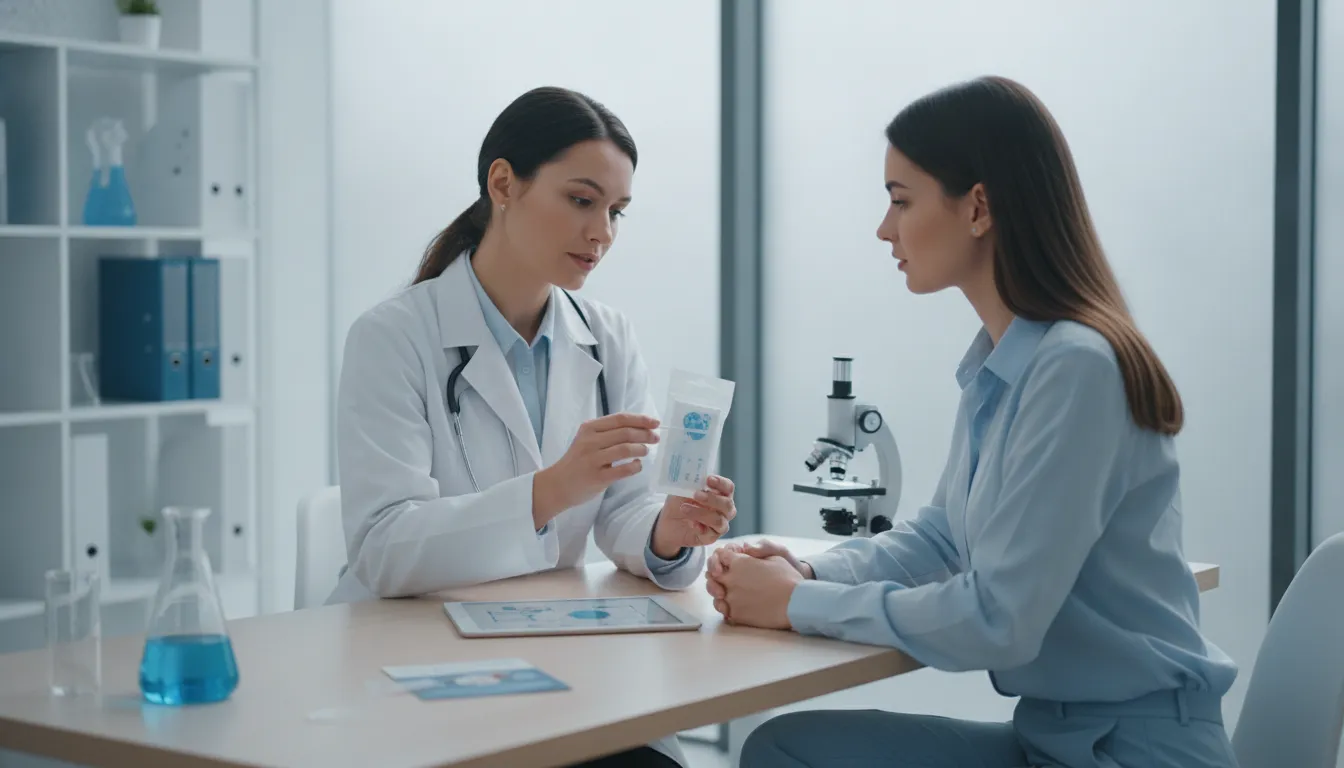
A home test, a clinic exam, and a lab swab don’t all tell you the same thing. For example, an at-home pH test measures acidity, but it can’t confirm that Candida is causing your symptoms. A yeast infection test that checks a vaginal sample may offer more direct information, and a provider can help interpret the result alongside your symptoms. In this guide, you’ll learn how common tests work, what can affect results, and when additional testing may be useful. If you’re dealing with severe or persistent symptoms, don’t rely on a home result alone. Health First Urgent Care welcomes walk-ins seven days a week across the Tri-Cities; contact a location to ask about evaluation and testing.
Key Takeaways
- Symptoms don’t confirm a yeast infection: Itching, burning, and discharge can have several causes, so a healthcare provider may recommend testing before treatment.
- Tests provide different kinds of information: At-home pH tests offer a clue, while clinical samples can check for Candida and help identify other possible causes.
- Seek care when symptoms need attention: Contact a provider for first-time, severe, recurring, or persistent symptoms, or for fever, pelvic pain, sores, unusual bleeding, or possible pregnancy. Health First Urgent Care offers walk-in care seven days a week in the Tri-Cities.
What Is a Yeast Infection, and When Do You Need a Test?
A vaginal yeast infection, also called candidiasis, develops when yeast grows out of control. It may cause itching, burning, or changes in discharge, but other conditions can cause similar symptoms. Testing can help identify the cause and guide appropriate care.
How Candida causes an infection
Candida is a type of fungus that commonly lives on the skin and inside the body. It usually causes no problems, but an infection can develop when it grows excessively. Having a yeast infection does not, by itself, indicate poor hygiene.
The test a healthcare provider recommends depends on where you have symptoms and what may be causing them. For vaginal symptoms, a provider may collect a sample for examination or lab testing. Read more about how yeast infection tests work from MedlinePlus.
Common symptoms: itching, burning, redness, soreness, and discharge
A vaginal yeast infection may cause itching, redness, or soreness around the vagina. You may also feel burning during urination or sex, or notice changes in vaginal discharge. Symptoms can range from mild to uncomfortable, and not everyone experiences them in the same way.
Make note of when your symptoms began and whether they are getting better or worse. If this is your first episode, symptoms are severe, or they persist after treatment, contact a healthcare provider rather than assuming the cause. A provider can assess your symptoms and advise whether testing may help. See more about symptoms linked to yeast infections.
Why symptoms alone can’t identify the cause
Yeast infection symptoms can resemble those of other vaginal conditions, including bacterial vaginosis and some sexually transmitted infections. Itching, burning, or discharge may offer clues, but they cannot reliably confirm what is causing the symptoms. Odor or a change in discharge can also have causes other than yeast.
Some at-home tests measure vaginal pH, which may offer information but cannot confirm a yeast infection. Using an antifungal treatment when yeast is not the cause may delay the right care. If symptoms are new, recurring, persistent, or concerning, ask a healthcare provider whether an exam or test is appropriate.
Which Tests Can Detect a Yeast Infection?
Different tests offer different kinds of information. At-home pH tests can provide a clue, while lab swabs and clinical testing can check more directly for Candida. The best option depends on your symptoms, health history, and whether you need a provider to interpret the result or check for other causes.
At-home vaginal pH tests: what they measure and can’t confirm
At-home vaginal pH tests measure how acidic vaginal fluid is. A typical vaginal pH is about 3.8 to 4.5. A reading above that range may signal a change worth discussing with a healthcare provider, but it cannot confirm a yeast infection or show what is causing your symptoms. Yeast infections often do not raise vaginal pH, while other infections can.
Follow the kit instructions closely and treat the result as a clue, not a diagnosis. If symptoms are new, severe, or persistent, seek medical advice even if your reading is in the usual range. The AZO Vaginal pH Test explains what the test measures and how to interpret its result.
At-home lab swabs: how to collect a sample, follow instructions, and get results
An at-home lab test generally involves collecting a vaginal swab and sending it to a laboratory. Depending on the test, the lab may check for Candida and may also look for other possible causes, such as certain bacteria or sexually transmitted infections. Read the instructions carefully, because collection and shipping steps vary. A sample that is collected or handled incorrectly may affect the result.
Results often take a few days. Reported accuracy for send-in lab tests ranges from 92% to 99%, but performance depends on the specific test and proper sample collection. Before ordering, check what the test screens for and whether a healthcare provider is available to explain your results. MedlinePlus’s overview of yeast infection tests describes testing options and factors to consider.
Clinical tests: exams, samples, and lab options
A healthcare provider may ask about your symptoms and medical history, then collect a sample of vaginal discharge. They may examine it under a microscope to look for yeast cells. If the result is unclear, or symptoms continue or return, the sample may be sent to a lab for a culture. A culture can help identify the type of fungus present.
An evaluation can also help determine whether another condition may be causing itching, burning, or discharge. Your provider should explain the exam and any testing before it begins, and you can ask questions or share concerns at any point. The CDC’s candidiasis testing guidance explains how microscopy and lab cultures can help diagnose an infection.
How test methods compare in accuracy, cost, and follow-up
A pH test is a quick at-home option, but it measures acidity rather than detecting yeast. MedlinePlus notes that pH tests are about two-thirds accurate on their own. A send-in lab swab checks more directly for Candida; reported accuracy ranges from 92% to 99%, though results can depend on the test and how well the sample is collected.
Costs vary based on the kit, lab, insurance coverage, and whether you see a provider. Before choosing a home test, check what it detects, how you’ll receive results, and whether follow-up support is available. A clinical evaluation may be helpful if symptoms are severe, recurring, or hard to interpret. In the Tri-Cities, Health First Urgent Care’s locations offer walk-in access seven days a week. Contact a clinic to ask whether it can evaluate your symptoms and provide the testing you need.
How Does a Clinical Yeast Infection Test Work?
A clinical evaluation usually begins with a conversation about your symptoms and health history. Depending on what you share and what the provider finds, they may recommend an exam and collect a sample for testing. You can ask questions at each step, including why a test is recommended and when you can expect results.
Discuss your symptoms, health history, pregnancy, and recent medications
Your provider may ask when your symptoms began, whether they have changed, and whether you have had similar symptoms before. Describe any itching, burning, soreness, or changes in discharge or odor. They may also ask about your health history, the possibility of pregnancy, and medicines you take or have recently used, including antibiotics or antifungal treatments.
These details help the provider consider whether Candida may be causing your symptoms or whether another condition needs to be considered. A review of symptoms and health history can help guide the next steps, though it cannot confirm the cause on its own. Share what you feel comfortable sharing, and ask if you have questions about why something is relevant.
What to expect during an exam, including consent and privacy
If an exam is recommended, your provider should explain what it involves and why it may be useful. You can ask questions before it begins, discuss concerns, and ask the provider to pause or stop at any point. If you would feel more comfortable with a chaperone or support person present, ask whether that is an option.
A pelvic exam may involve a speculum, which helps the provider view the vaginal walls and cervix and collect a sample. Not every evaluation requires the same exam. A clinical overview of vaginitis testing describes how a sample may be collected during a pelvic exam. Tell your provider if you feel discomfort or need a break.
How providers collect a vaginal sample
To collect a sample, a provider may gently use a cotton swab to gather vaginal fluid or discharge. This may happen during a pelvic exam. Depending on the setting and the test, self-collection may be an option. If so, the provider or clinic staff can explain how to collect the sample and handle it properly.
The sample may be checked at the clinic or sent to a laboratory for further testing. Follow any instructions the clinic gives you before your visit. If you have recently used vaginal creams, suppositories, or other treatments, tell your provider what you used and when. That information may help them interpret the findings. MedlinePlus explains how samples are collected for yeast infection testing.
When providers use microscopy, culture, or other tests
A provider may examine vaginal fluid under a microscope to look for yeast. If the sample does not provide a clear answer, or symptoms continue, they may send it to a lab for a fungal culture. A culture lets the lab grow cells from the sample before identifying them. Results often take a few days, though some types of yeast can take longer to grow.
The right test depends on your symptoms, exam findings, and health history. If yeast is not identified, your provider may consider other causes of vaginal symptoms and recommend additional testing. Ask which test is being performed, when results may be ready, and how you will receive them. MedlinePlus outlines microscopy and culture testing.
What Can Yeast Infection Test Results Tell You?
A yeast infection test can help determine whether Candida, the fungus most often linked to vaginal yeast infections, is present. The result is most useful when considered alongside your symptoms, health history, and exam. It may not explain discomfort on its own, and it may lead your provider to check for other causes.
If your results don’t match how you feel, or symptoms continue after treatment, follow up with a healthcare provider. They can review the test method and sample, then discuss whether more testing or a different approach makes sense.
What positive and negative results can and can’t confirm
A positive result means the test detected Candida in the sample. When you also have symptoms such as itching, soreness, or unusual discharge, that finding may support a yeast infection diagnosis. Still, a positive result does not always mean Candida is causing your symptoms. Some people carry Candida without having an infection, so providers interpret test results along with symptoms and exam findings. The CDC’s guidance on candidiasis testing explains this distinction.
A negative result means the test did not detect Candida in the sample. It can make a yeast infection less likely, but it may not rule one out in every case. Results can depend on the test method and sample quality. If symptoms persist, ask whether another test or evaluation for a different cause is appropriate.
Why Candida may not be causing your symptoms
Itching, burning, soreness, and changes in discharge can have more than one cause. A test may detect Candida, but that result does not automatically explain every symptom. Some people have Candida without symptoms, as the CDC notes. Your provider will consider whether the result fits what you’re experiencing before recommending treatment.
Bacterial vaginosis, trichomoniasis, and other infections can cause similar symptoms. An antifungal medicine may not help if Candida isn’t the cause, and treating without identifying the cause can delay the right care. If this is your first episode, your symptoms feel different than usual, or treatment hasn’t helped, contact a healthcare provider for an evaluation.
How sample collection, recent treatment, and test type affect results
Clinical testing often involves collecting a sample of vaginal discharge during an exam. The sample needs to contain enough material for the test. If it does not, a provider may recommend a fungal culture or another testing method. MedlinePlus explains how yeast infection tests are performed, including how a sample may be collected.
Different tests detect Candida in different ways, and the time it takes to get results can vary. A culture may take a few days. Tell your provider if you’ve recently used an antifungal medicine, since that detail may help them interpret the results. If you used an at-home test, follow its instructions and share the result with a provider if symptoms continue or you’re unsure what it means.
When providers may test for other causes, such as bacterial vaginosis or an STI
If your symptoms or test results don’t clearly point to a yeast infection, your provider may check for other causes. A vaginal sample can be tested for Candida, trichomoniasis, and signs of bacterial vaginosis. Harvard Health describes testing for these causes of vaginitis. Your provider may also recommend testing for a sexually transmitted infection (STI), depending on your symptoms, health history, and possible exposure.
These conditions can feel similar but require different treatment, so share any concerns or possible STI exposure with your provider. If you’re in the Tri-Cities and need an evaluation, Health First Urgent Care offers walk-in care seven days a week.
When Should You Contact a Healthcare Provider?
Yeast infection symptoms can overlap with other conditions, so it’s important to get medical guidance when symptoms are new, severe, keep returning, or come with warning signs. A healthcare provider can review your symptoms and health history and recommend whether testing or treatment is appropriate.
Seek guidance for first-time, severe, recurring, or persistent symptoms
If you think you may have a yeast infection for the first time, check with a healthcare provider before trying an over-the-counter treatment. Itching, burning, and discharge can have other causes, and treatment depends on the cause. Harvard Health recommends consulting a clinician before treating a first suspected infection.
Arrange an evaluation if symptoms are severe, keep coming back, or don’t improve after treatment. A provider can assess whether the diagnosis is correct and whether you may need testing or a different treatment. Avoid taking repeated courses of antifungal medication without medical guidance.
Get prompt care for fever, pelvic pain, sores, unusual bleeding, or possible pregnancy
Contact a healthcare provider promptly if you have a fever, pelvic or lower abdominal pain, sores, unusual vaginal bleeding, or pain during sex. These symptoms aren’t typical of an uncomplicated yeast infection and may need further evaluation. CVS MinuteClinic’s guidance lists fever, stomach pain, and vaginal bleeding among symptoms that may warrant additional assessment.
If you’re pregnant or might be pregnant, ask a provider before using an antifungal treatment. Seek emergency care for severe pain, heavy bleeding, fainting, or symptoms that feel life-threatening. If you’re unsure where to go, call a healthcare provider and describe your symptoms so they can advise you on the next step.
Ask about an evaluation if you have a weakened immune system or other health concerns
Talk with a healthcare provider if you have a weakened immune system, diabetes, or another health condition that may affect your symptoms or treatment. Mention any recent antibiotic use, other medications, and previous yeast infections. These details can help the provider decide whether testing is appropriate and what treatment may be safe.
People with weakened immune systems can face a higher risk of serious complications from certain Candida infections. The CDC’s information on candidiasis testing explains why testing and timely care may be important for people with specific risk factors. If symptoms are new or getting worse, don’t assume they’re a routine yeast infection. A provider can assess your health history and help determine what to do next.
Consider walk-in care for timely evaluation; Health First Urgent Care serves the Tri-Cities seven days a week
A walk-in clinic can be a convenient place to discuss symptoms and ask whether an exam or testing is appropriate. Services vary by clinic, so call ahead to confirm whether the location can evaluate your concern and what to expect during a visit.
Health First Urgent Care serves the Tri-Cities, including Richland, Pasco, and Kennewick, and welcomes walk-in patients seven days a week. Check the clinic’s services and locations before you go. If you have severe pain, heavy bleeding, fainting, or another emergency, seek emergency care instead of waiting for a walk-in evaluation.
What Happens After a Yeast Infection Is Confirmed?
Once testing confirms a yeast infection, treatment depends on your symptoms and health history. Your provider can help choose an appropriate option and explain when to follow up. If you’re pregnant or have had several infections, mention that before starting treatment, since it may affect the recommended plan.
Over-the-counter antifungal creams and suppositories
For some uncomplicated yeast infections, a healthcare provider may recommend an over-the-counter antifungal cream or vaginal suppository. Depending on the product, medicine may be used inside the vagina or on the skin around it. Follow the package directions for how much to use and how long to continue treatment. If you’re unsure which product is right for you, ask a provider or pharmacist before starting.
It’s best not to assume that itching or discharge is caused by yeast, especially if this is your first episode. Other conditions can cause similar symptoms and need different treatment. MedlinePlus describes treatments that may be used after a yeast infection is identified.
When you may need prescription treatment or more testing
Contact a healthcare provider if symptoms are severe, don’t improve after treatment, or return soon afterward. Your provider may recommend a prescription antifungal or additional testing to check whether Candida is causing the symptoms. Because bacterial vaginosis and some sexually transmitted infections can cause similar symptoms, treatment based on symptoms alone may not address the actual cause.
Testing can help clarify what’s going on and guide the next step. The CDC’s candidiasis testing guidance explains how healthcare providers assess suspected infections. If you’re in the Tri-Cities and need an evaluation, Health First Urgent Care offers walk-in care seven days a week.
Why treatment may differ during pregnancy or for recurring infections
Tell your provider if you’re pregnant, could be pregnant, or have had repeated yeast infections. These details may affect your treatment plan. Recurring symptoms may also prompt additional testing or a longer course of treatment to confirm the cause and reduce the chance of another episode.
During pregnancy, check with a healthcare provider before using an antifungal medicine. The CDC recommends topical azole treatment for seven days during pregnancy and advises against oral fluconazole. Your provider can help you choose an option that fits your situation and explain whether follow-up testing is needed.
Follow treatment directions and ask what to do if symptoms continue
Use antifungal medicine for the full time directed, even if you start to feel better sooner. If you miss a dose, check the product instructions or ask a pharmacist or provider what to do. Don’t double a dose or repeat a treatment course without checking first, particularly if symptoms persist or return.
Ask your provider when you should expect improvement and when to follow up. If symptoms worsen, don’t improve after treatment, or come back, arrange another evaluation. The initial test may need to be reconsidered, or a different cause may need to be checked. Your provider can determine whether further testing or another treatment is appropriate.
Related Articles
- Yeast Infection Tests
- Yeast Infections: Symptoms & Treatment
- Testing for Vaginitis: Yeast Infections, Trichomonas, and Gardnerella A to Z
- Candidiasis Testing
- Candidiasis: STD Treatment Guidelines
Frequently Asked Questions
Can I tell if I have a yeast infection from my symptoms alone?
Not reliably. Itching, burning, and changes in discharge can also happen with other conditions. A healthcare provider can consider your symptoms and health history and decide whether testing is useful.
Can an at-home vaginal pH test confirm a yeast infection?
No. It measures acidity, not the presence of Candida. Use the result as a clue, and seek medical advice if symptoms are new, severe, or ongoing.
What happens during a clinical yeast infection test?
A provider may ask about your symptoms and health history, then collect a vaginal sample for examination or lab testing. They should explain the steps and answer your questions before an exam or sample collection.
When should I get medical care for possible yeast infection symptoms?
Contact a healthcare provider if this is your first episode, symptoms are severe or recurring, or treatment hasn’t helped. Seek prompt guidance for fever, pelvic pain, sores, unusual bleeding, or possible pregnancy.
Can I visit Health First Urgent Care for an evaluation in the Tri-Cities?
Health First Urgent Care offers walk-in care seven days a week in the Tri-Cities. Contact a clinic to confirm whether it can evaluate your symptoms and provide the testing you need.