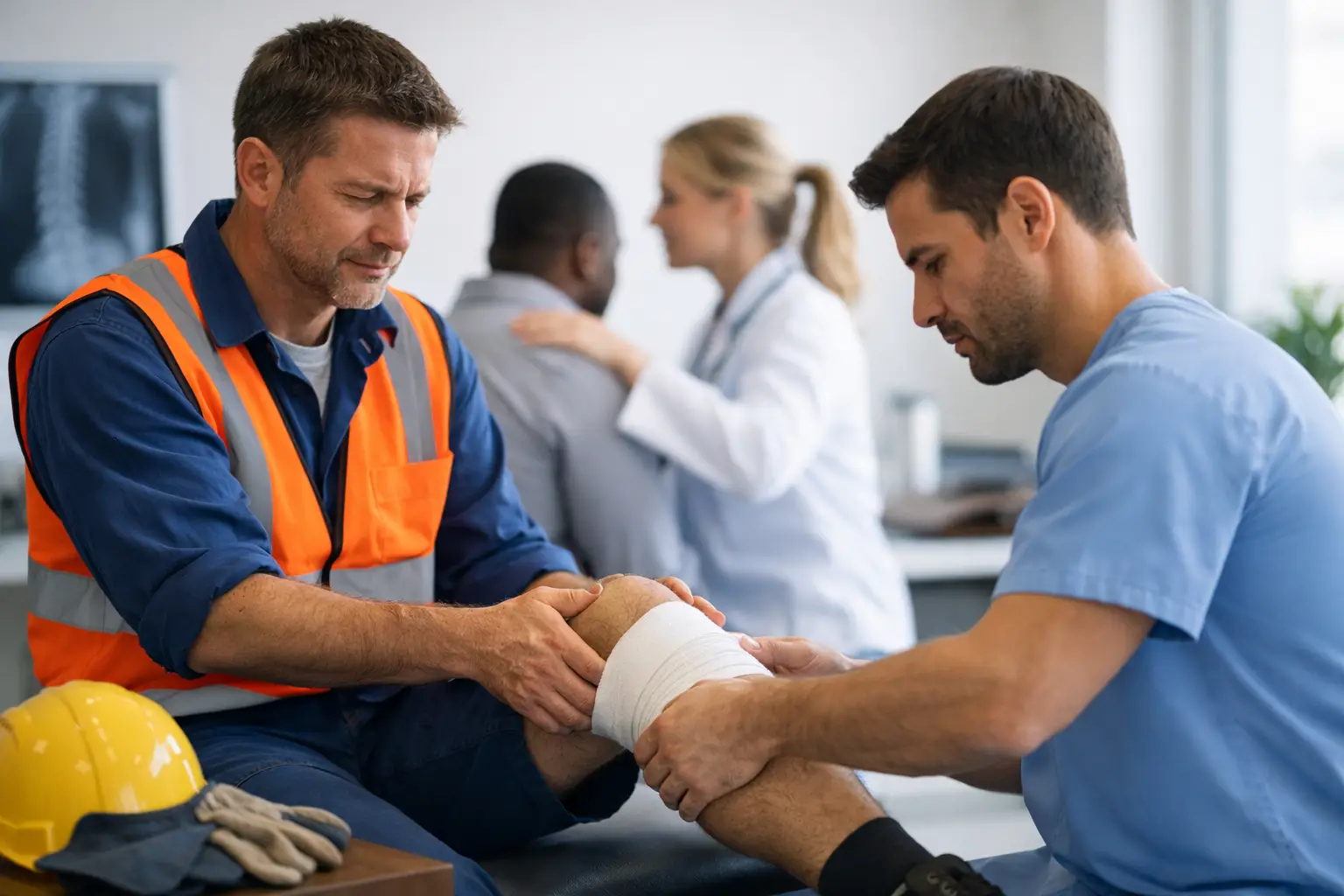
A sore back after moving inventory, a cut from a box cutter, or a splash of cleaning solution in the eye can derail a workday quickly. Common workplace injury treatments depend on the injury and how it happened. They also depend on whether there are signs of a more serious problem. Fast evaluation can relieve pain, protect against infection, document the incident, and help workers understand when it is safe to return to regular duties.
For non-life-threatening injuries, urgent care can often provide same-day assessment and treatment. However, severe bleeding, loss of consciousness, chest pain, trouble breathing, a suspected major fracture, or a serious chemical exposure requires emergency care right away.
Treatment Starts With a Clear Injury Assessment
Workplace injuries are not always obvious at first. A worker may finish a shift with a stiff shoulder, then wake up the next morning unable to lift an arm. A small puncture wound may look minor but carry a risk of infection or require a tetanus booster. The first step is identifying what tissue may be affected. Also, it is important to determine whether the injury needs imaging, wound care, medication, activity restrictions, or referral for additional care.
During an urgent care visit, the clinician will ask how the injury occurred, when symptoms started, what body part is affected, and whether there was prior pain or injury in the same area. They may check range of motion, strength, circulation, sensation, and signs of swelling or infection. In some cases, depending on the concern, an X-ray may be used to look for fractures or certain joint injuries.
For work-related injuries, reporting the incident to a supervisor according to workplace policy matters. Prompt reporting helps an employer address hazards and may be necessary for workers’ compensation processes. Workers should also follow their employer’s instructions about approved occupational health care and claim documentation.
Common Workplace Injury Treatments by Injury Type
Strains, sprains, and overuse injuries
Lifting, pushing, repetitive motions, awkward posture, and slips can lead to muscle strains and ligament sprains. The back, neck, shoulders, wrists, knees, and ankles are frequent trouble spots. Treatment often begins with reducing activities that worsen pain while avoiding prolonged inactivity when movement is safe.
A clinician may recommend ice for a recent injury with swelling, followed by heat or gentle mobility work when appropriate. Over-the-counter pain relievers may help some patients, but they are not right for everyone. For example, people with kidney disease, stomach ulcers, blood-thinning medications, or certain other conditions should ask a clinician or pharmacist before taking anti-inflammatory medicine.
Supportive care may include a brace, splint, or activity modification. The goal is not simply to get through the next shift. It is to protect the injury while maintaining safe movement. This also prevents a minor strain from becoming a longer recovery. If pain is severe, weakness is present, numbness develops, or symptoms do not improve as expected, further evaluation may be needed.
Cuts, punctures, and other wounds
Cuts are common in food service, construction, warehouse work, maintenance, and many office settings. Treatment depends on the depth of the wound, the location, contamination, bleeding, and possible damage to tendons, nerves, or other structures.
For a small cut, gentle washing with clean running water and pressure with a clean cloth can control bleeding. Do not pour harsh chemicals into a wound. A clinician can determine whether the wound needs thorough cleaning, closure with stitches or other methods, a bandage plan, or infection prevention treatment.
Puncture wounds deserve particular attention because germs can be pushed deeper into the skin. Injuries from dirty equipment, nails, needles, animal bites, or contaminated surfaces may require a tetanus update or additional treatment. You should seek prompt care if bleeding does not stop with firm pressure, the wound is deep or gaping, or there is loss of feeling or movement. In addition, redness, warmth, drainage, fever, or worsening pain are also reasons to seek care.
Burns and chemical exposures
Heat burns can occur around kitchens, machinery, hot liquids, steam, welding equipment, and electrical sources. A mild burn may be treated by cooling the area under cool running water, covering it loosely with a clean dressing, and seeking assessment if it is blistered, large, painful, or located on the face, hands, feet, genitals, or a major joint.
Do not use ice, butter, or adhesive materials on a burn. Ice can further damage injured skin, while home remedies can trap heat or complicate medical evaluation. Deep burns, burns with white or charred skin, electrical burns, and burns involving breathing smoke require emergency evaluation.
Chemical injuries require a different response. Remove contaminated clothing if it can be done safely, then flush the affected skin or eyes with clean water immediately. For eye exposures, continuous flushing is especially time-sensitive. Bring the product label or safety information if available, but do not delay flushing or emergency care to find it.
Eye injuries
Dust, metal fragments, wood particles, cleaning chemicals, and flying debris can scratch or irritate the eye. Even when an object appears to be gone, ongoing pain, tearing, light sensitivity, redness, or a sensation that something remains in the eye should be checked.
Treatment may involve rinsing, an eye examination, removal of a superficial foreign body when appropriate, and medication to prevent or treat infection. Do not rub an injured eye or try to remove an embedded object. If there is vision loss, a penetrating injury, severe pain, or chemical exposure, seek emergency care immediately.
Fractures, crush injuries, and serious joint injuries
A fall, dropped object, vehicle incident, or machinery accident can cause a broken bone, dislocation, or crush injury. Swelling, bruising, deformity, inability to bear weight, severe tenderness, or reduced movement can all signal a more significant injury.
Urgent care may assess many suspected minor fractures with an exam and X-ray, then provide stabilization such as a splint and arrange follow-up when needed. However, a visibly deformed limb, uncontrolled pain, a pale or cold extremity, heavy bleeding, or a crush injury with significant swelling should be treated as an emergency. These injuries can affect blood flow, nerves, and surrounding tissue.
Why Follow-Up and Work Restrictions Matter
A treatment plan is only useful if it matches the job. A receptionist with a wrist sprain may need a different restriction than a delivery driver or a worker who operates machinery. Temporary limits might include no lifting above a certain weight, reduced repetitive gripping, seated duties, avoiding ladders, or keeping a wound clean and dry.
Restrictions are not a punishment or a sign that someone is unwilling to work. They are a practical way to prevent reinjury while healing. Return-to-work timing depends on pain control, physical function, the risk of aggravating the condition, and the essential duties of the position.
Follow-up is also the point where a care plan can change. Pain that persists, new numbness, swelling that increases, wound drainage, fever, or decreased range of motion may mean the injury needs more than the initial treatment. For record keeping, keep any work-status paperwork, medication instructions, and follow-up information together for the employer, claim administrator, and medical team as needed.
When a Walk-In Visit Makes Sense
A same-day clinic visit is often appropriate for a new strain, sprain, uncomplicated cut, mild-to-moderate burn, possible minor fracture, eye irritation, or a wound that may need cleaning or a tetanus review. For Tri-Cities workers, quick care can also help avoid waiting days for an appointment when an injury needs timely attention.
Health First Urgent Care can evaluate many non-emergency workplace injuries and provide clear next-step guidance. If there is any doubt about a potentially life-threatening injury, choose emergency care instead. Acting early, reporting clearly, and following the treatment plan gives a workplace injury the best chance to heal without turning into a longer interruption.