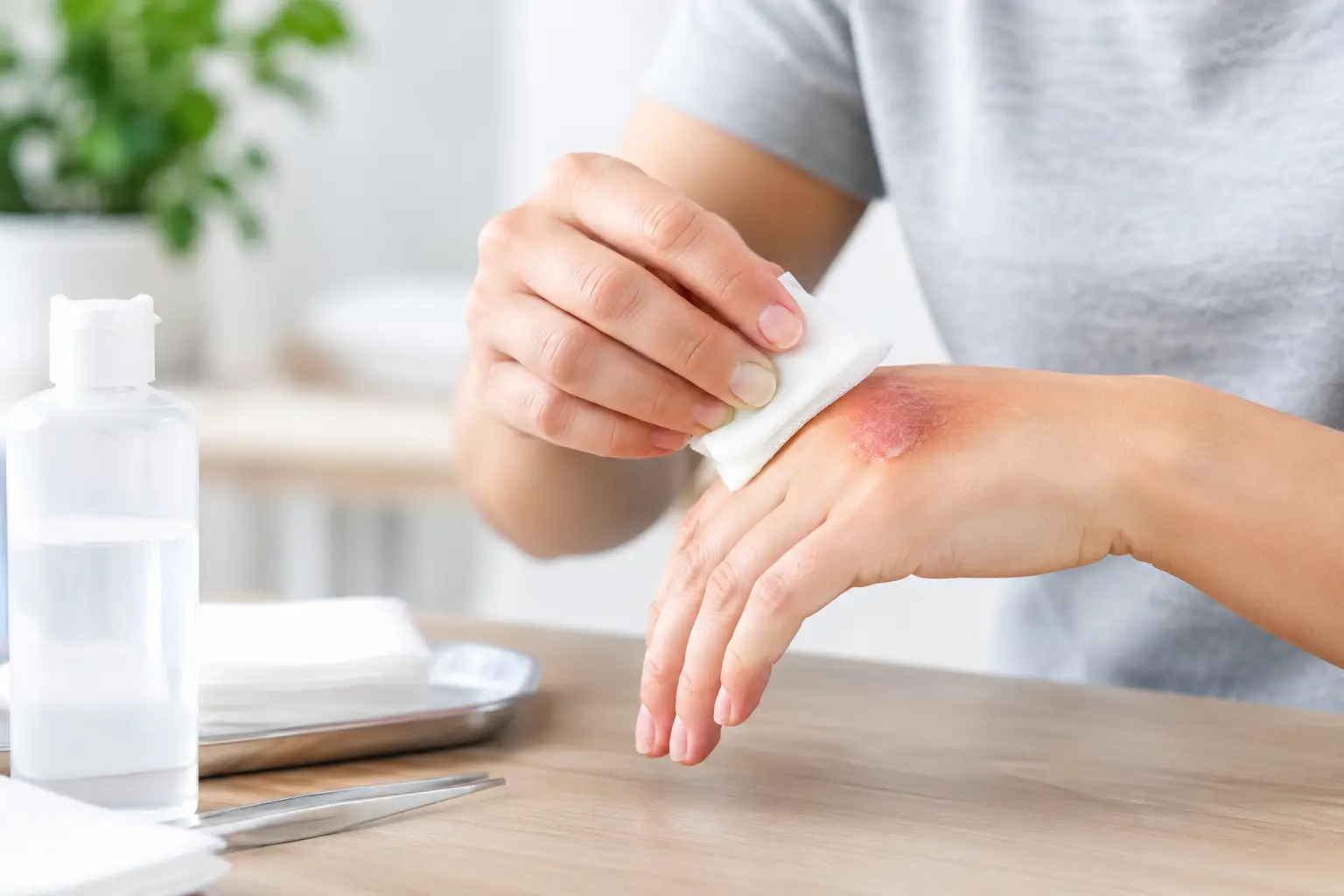
A quick touch to a hot pan, curling iron, grill grate, or exhaust pipe can leave you with a painful burn in seconds. Knowing how to clean minor burns correctly can reduce discomfort and help protect damaged skin from infection. The goal is simple: cool the area, clean it gently, cover it properly, and recognize when the injury needs medical care.
What Counts as a Minor Burn?
Most minor burns are first-degree burns. They affect the outer layer of skin and cause redness, tenderness, mild swelling, and pain, much like a strong sunburn. A small, shallow second-degree burn may also be manageable at home, but it can form blisters and needs closer attention.
A burn is not automatically minor just because it is small. The location matters. Burns on the face, hands, feet, genitals, joints, or a large area of skin can affect movement, healing, and daily function. A small burn may also need evaluation if pain is severe, the skin looks white or charred, or the cause was electricity or chemicals.
How to Clean Minor Burns Safely
Start first aid as soon as possible. If a hot object, clothing, or jewelry is still touching the skin, remove it carefully. Take off rings, watches, bracelets, or tight clothing near the burn before swelling begins. Do not pull away fabric that is stuck to burned skin.
Cool the burn under running water
Hold the burned area under cool running water for about 20 minutes. Cool water helps stop heat from continuing to damage the skin and can lessen pain and swelling. If running water is not available, use a clean, cool wet cloth and replace it as it warms.
Do not use ice or ice water. Extreme cold can further injure already-damaged skin. Butter, oils, toothpaste, egg whites, and other home remedies can trap heat, irritate the area, or introduce bacteria.
Wash your hands, then clean gently
Before touching the burn, wash your hands with soap and water. Once the burn has been cooled, gently rinse the area with clean water. Mild soap can be used around the burn, but do not scrub the damaged skin or use harsh cleansers, alcohol, hydrogen peroxide, or iodine. These products can slow healing by irritating healthy tissue.
If the burn has a blister, leave it intact. A blister protects the skin underneath from germs. Do not pop it, pick at it, or trim loose skin at home. If a blister breaks on its own, rinse the area gently with soap and water, pat it dry with a clean cloth, and cover it with a sterile nonstick dressing.
Cover and protect the skin
After cleaning, apply a thin layer of plain petroleum jelly if the skin is intact or only lightly blistered. This can help keep the wound from drying out and prevent a dressing from sticking. A nonstick sterile pad or gauze dressing is usually a good choice.
Avoid fluffy cotton or adhesive bandages directly over the burn. Fibers can stick to the wound, and adhesive can pull on sensitive skin when removed. Wrap the dressing loosely enough to avoid pressure and allow for swelling. Change it daily, or sooner if it becomes wet, dirty, or loose.
Antibiotic ointments are not always necessary for minor burns. Some people develop a rash or irritation from these products. If you have had a skin reaction to an ointment before, choose plain petroleum jelly unless a clinician recommends something else.
Managing Pain While the Burn Heals
Minor burns can remain painful for several days, especially when they are on fingers, hands, or areas that rub against clothing. Over-the-counter pain medicine such as acetaminophen or ibuprofen may help when taken as directed on the label. Ibuprofen is not right for everyone, including some people with kidney disease, stomach ulcers, certain heart conditions, or blood-thinning medications.
Keep the burned area elevated if it is on a hand, arm, foot, or leg and is beginning to swell. Wear loose clothing around the injury, and avoid friction from shoes, gloves, or equipment until the skin is healing well.
As the burn improves, itching can be normal. Try not to scratch. Continue protecting the area from sun exposure, since healing skin can darken or discolor more easily. Once the skin is fully closed, sunscreen can help protect the new skin.
When a Minor Burn Needs Urgent Care
Some burns look manageable at first but need same-day medical attention. Visit urgent care if the burn is larger than your palm, crosses a joint, wraps around a finger, wrist, arm, or leg, or is on the face, hands, feet, genitals, or a major joint.
You should also be evaluated if the burn is deeply blistered, appears white, brown, black, leathery, or numb, or if pain is getting worse instead of better. These can be signs of a deeper burn.
Watch for infection during the days after the injury. Increasing redness, warmth, swelling, pus, red streaks, fever, or a bad odor should be checked promptly. A burn that is not improving after a few days, or has not healed within about two weeks, also deserves medical evaluation.
Electrical and chemical burns should be assessed by a medical professional, even when the surface injury seems small. Electricity can cause damage beneath the skin, while chemicals can continue burning until fully removed. For a chemical burn, brush off any dry chemical if it can be done safely, remove contaminated clothing, and flush the area with running water. Call 911 for serious burns, trouble breathing, burns from a fire in an enclosed space, or any situation where the person is faint, confused, or severely injured.
Burns in Children and at Work
Children have thinner skin, so a burn that appears mild in an adult may be more serious in a young child. Seek care sooner for burns involving infants, toddlers, large blisters, or any burn that makes a child unusually sleepy, difficult to comfort, or unwilling to use the affected hand or limb.
At work, burns from hot surfaces, steam, chemicals, welding, or electrical equipment may require documentation and follow-up in addition to treatment. Prompt care can help protect the injury, address pain, and determine when it is safe to return to regular duties. For Tri-Cities residents, Health First Urgent Care can evaluate non-life-threatening burns that need same-day attention.
A properly cleaned and covered minor burn often heals well. If you are unsure whether a burn is truly minor, it is reasonable to have it checked early rather than wait for pain, swelling, or signs of infection to worsen.