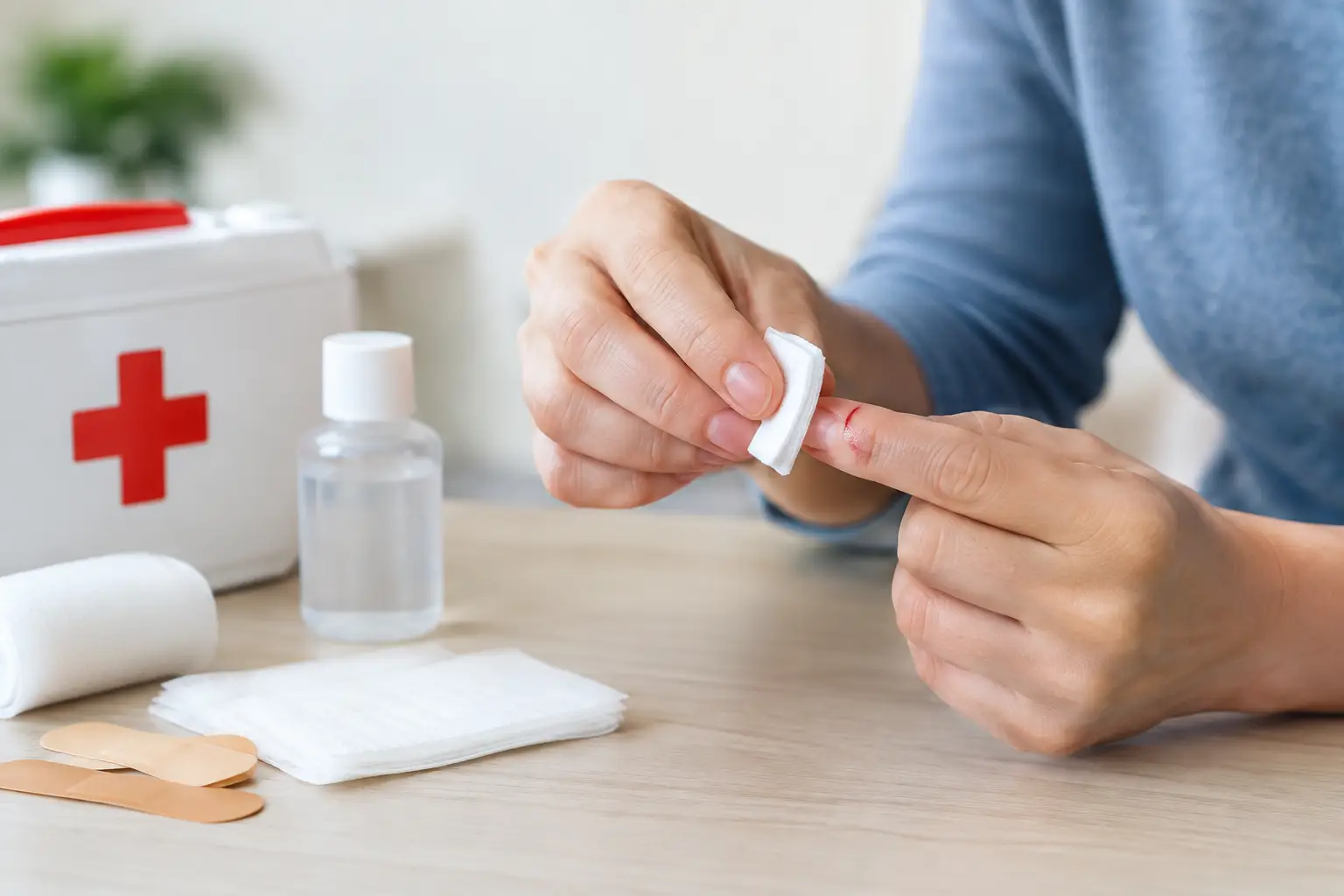
A kitchen knife slips while preparing dinner. A child scrapes a knee on the sidewalk. A cardboard edge catches your hand at work. Small cuts are common, but the first few minutes can affect bleeding, infection risk, and healing. Knowing how to handle minor cuts helps you respond calmly instead of guessing which home remedy to use.
Most small, shallow cuts can be cleaned and covered at home. The key is to control bleeding, rinse the wound well, protect it from friction and dirt, and watch for changes over the next several days. A wound that looks small on the surface can still need medical attention if it is deep, dirty, or affecting movement or feeling.
Start by deciding whether it is truly minor
A minor cut is usually shallow, has clean edges, stops bleeding with steady pressure, and does not expose fat, muscle, tendon, or bone. It should not cause numbness, weakness, or trouble moving a finger, hand, foot, or other nearby body part.
Before treating the wound, take a quick look at the mechanism of injury. A clean paper cut is very different from a puncture from a rusty nail, a bite, a cut from broken glass, or an injury involving machinery. Dirty, contaminated, or high-force injuries deserve more caution even when the opening appears small.
Call 911 or go to an emergency department for severe bleeding that will not stop, blood that spurts or pulses from the wound, a large or deep wound, or signs of shock such as fainting, confusion, pale skin, or trouble breathing. Urgent care is often a better fit for non-life-threatening cuts that may need cleaning, closure, a tetanus update, or an exam for a possible foreign object.
How to handle minor cuts step by step
Start by washing your hands with soap and water. If available, put on disposable gloves, especially if you are helping someone else. This reduces the chance of bringing bacteria into the wound.
Apply firm, direct pressure with clean gauze or a clean cloth. Hold pressure continuously for several minutes rather than lifting the cloth repeatedly to check. If blood soaks through, add another layer on top. Removing the first layer can disturb the clot that is starting to form.
Once the bleeding has slowed or stopped, rinse the cut under clean running water. Gently wash the surrounding skin with mild soap. If you can see small debris, such as dirt or gravel, use clean tweezers that have been washed with soap and water to remove it. If debris is embedded, if glass may still be in the wound, or if you cannot fully clean it, seek medical care.
Pat the area dry with a clean towel or gauze. A thin layer of petroleum jelly can keep the wound from drying out and sticking to the bandage. Some people use an over-the-counter antibiotic ointment, which may be appropriate for some wounds, but stop using it if a rash or irritation develops. Avoid putting hydrogen peroxide, rubbing alcohol, or iodine directly into the cut unless a clinician instructs you to do so. These products can damage healing tissue and cause unnecessary irritation.
Cover the wound with a sterile adhesive bandage or gauze pad. The right dressing depends on the location. A flexible bandage works well for a small finger cut, while a nonstick pad and tape may be more comfortable over a knuckle, elbow, or knee. The dressing should protect the area without being so tight that it causes numbness, tingling, swelling, or color changes below it.
Keep the cut clean while it heals
Change the bandage at least once a day and anytime it becomes wet, dirty, or loose. Wash your hands before and after changing it. At each dressing change, rinse the area gently with clean water and check for increasing redness, swelling, drainage, or pain.
For many small cuts, keeping the wound lightly moist and covered supports healing better than letting it form a thick, dry scab. That said, the wound still needs air exposure during bandage changes and should not stay soaked. If the cut is on a hand, use common sense around dishwater, cleaning solutions, gardening, and other activities that expose it to germs or irritants.
Try not to pick at scabs or peel skin around the wound. If the cut is near a joint, limit movements that repeatedly pull it open. A bandage may need reinforcement in high-motion areas, but a deep or gaping wound near a joint should be evaluated because it may need closure or special care.
Know the signs that a cut is becoming infected
Mild tenderness and a small amount of redness immediately around a fresh cut can be normal. Over the next day or two, those symptoms should gradually improve. Infection is more likely when pain, warmth, redness, or swelling gets worse instead of better.
Watch for pus or cloudy drainage, red streaks moving away from the cut, fever, swollen lymph nodes, or a bad smell. These symptoms call for prompt medical evaluation. People with diabetes, poor circulation, immune system conditions, or medications that suppress the immune system should have a lower threshold for seeking care. Even a small wound can be harder to heal when blood flow or infection defenses are reduced.
Animal and human bites also need medical attention, even if the skin break seems minor. Bites can introduce bacteria deep into tissue, and a clinician can determine whether antibiotics, tetanus protection, or other care is needed.
When a tetanus shot may be needed
Tetanus bacteria can enter through breaks in the skin, particularly wounds contaminated with soil, saliva, manure, or dirt. A rusty object does not cause tetanus by itself, but an injury from an outdoor or dirty object can raise concern because of the contamination involved.
For a clean, minor wound, a booster may be recommended if it has been 10 years or more since your last tetanus vaccine. For a dirty or major wound, the timing is typically shorter, often five years. If you do not know when you last received a tetanus shot, contact a medical provider. The recommendation can depend on your vaccination history and the type of wound.
Cuts that should be checked the same day
Some cuts are not emergencies but should not wait for a routine appointment. Seek same-day care if the wound is deep, has separated edges, is longer than a small superficial scratch, or continues bleeding after 10 to 15 minutes of direct pressure. Cuts on the face, eyelid, lip, hand, genitals, or over a joint may also require closer attention because of function and cosmetic healing.
Get checked if the cut was caused by glass, metal, a nail, a fishhook, a dirty blade, or a power tool. The same applies if you have numbness, tingling, weakness, limited movement, or a feeling that something is still inside the wound. Do not probe deeply into the cut at home.
For workers, report an on-the-job cut according to your employer’s procedure, especially if it involved contaminated equipment, chemicals, or another person’s blood. Prompt documentation and care can protect both your health and your workplace requirements.
Health First Urgent Care can evaluate many non-emergency cuts in the Tri-Cities, including wounds that need professional cleaning, possible closure, infection assessment, or tetanus guidance. Walk-in care can be a practical option when you need an answer the same day and the injury does not require emergency services.
A clean bandage, steady pressure, and a careful watch over the next few days go a long way. When the wound is deeper, dirtier, worsening, or simply does not look right, getting it checked early is usually the safer and simpler choice.