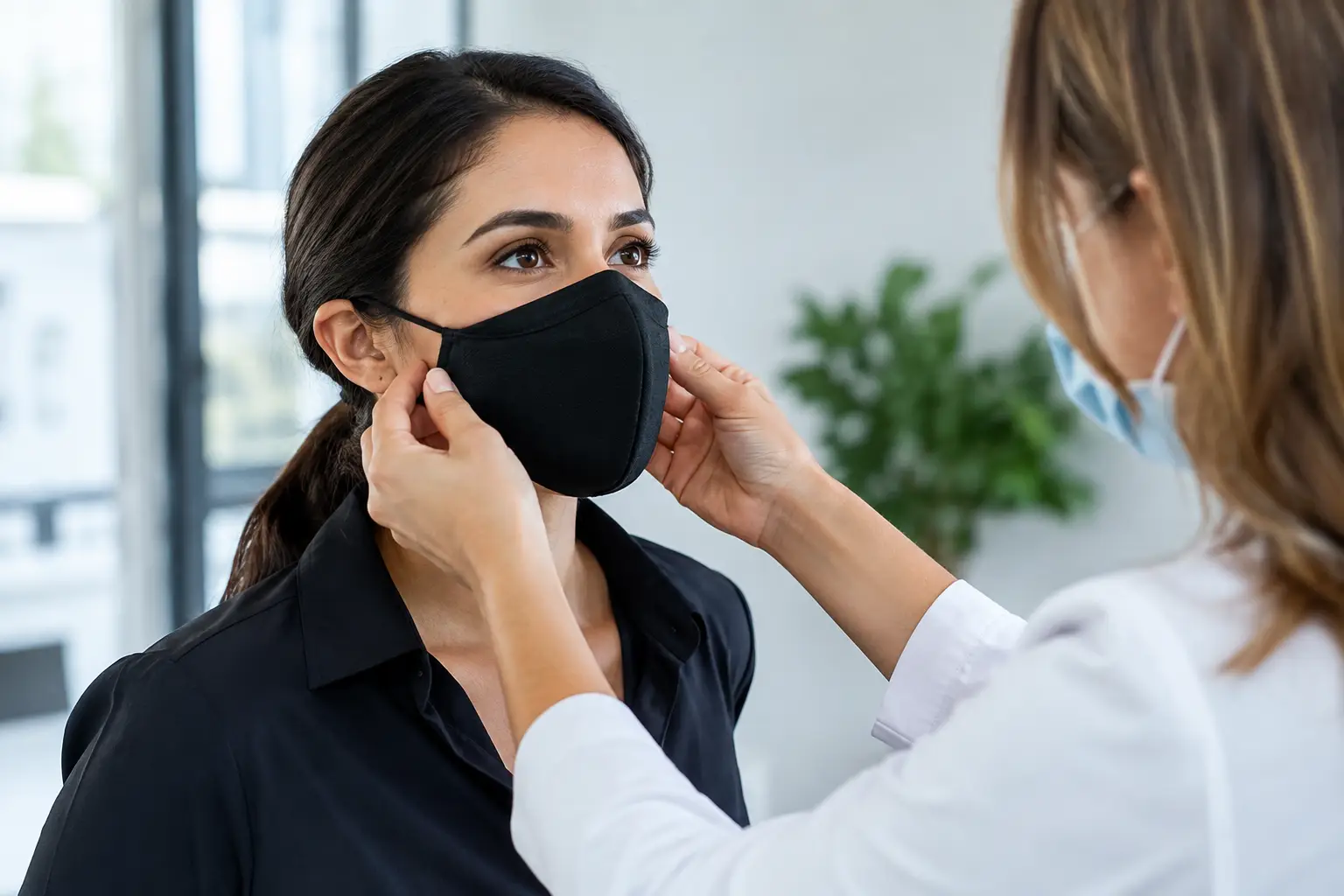
A useful mask fitting service review should answer one practical question first: will this visit help you meet your workplace requirement without wasting time? For employees who need respiratory protection, the right fit test is more than paperwork. It confirms that a required respirator forms an effective seal and helps identify problems before a worker enters an exposure-prone environment.
For Tri-Cities employers and workers, a mask fitting visit is often needed before starting a new position, returning to a task that requires respiratory protection, or completing annual workplace compliance requirements. Knowing what happens during the appointment can make the process faster and reduce the chance of an avoidable failed test.
What a Mask Fitting Service Is Designed to Do
A mask fitting service, often called respirator fit testing, evaluates whether a specific tight-fitting respirator seals properly against the wearer’s face. It applies to respirators such as N95 filtering facepiece respirators and reusable half-face respirators when an employer’s respiratory protection program requires fit testing.
The test does not simply show whether a mask feels comfortable. Comfort matters, especially for workers who may wear a respirator for long periods, but the central issue is the seal. Air will follow the easiest path. If there are gaps around the nose, cheeks, chin, or jawline, contaminated air may enter rather than pass through the respirator’s filter.
A fitting appointment can also help clarify whether the employee has the correct model, size, and style of respirator. A respirator that works well for one person may not seal adequately for another. Face shape, facial features, eyewear, and facial hair can all affect the result.
Mask Fitting Service Review: What to Expect at the Visit
Most appointments begin by confirming the type of respirator required for the job. Bring the respirator model your employer has approved or instructed you to use whenever possible. Testing is tied to the specific make, model, style, and size of respirator. Passing a test with one model does not automatically mean another model will fit the same way.
The clinician or trained tester will explain the process and make sure the respirator is positioned correctly. You may be asked to adjust the nosepiece, straps, or seal before testing begins. This portion is useful because many leaks come from putting on an otherwise appropriate respirator incorrectly.
There are two common testing approaches. Qualitative fit testing uses a harmless test agent with a noticeable taste or smell. While wearing a hood over the head and respirator, the worker performs a series of movements and breathing exercises. If the worker detects the test agent, the seal is not adequate.
Quantitative fit testing uses specialized equipment to measure particles inside and outside the respirator. It provides a numerical fit factor and is generally used when a higher level of measurement is required by the job, respirator type, or workplace policy. Employers should confirm which method their program requires before sending an employee for testing.
During either type of test, workers are commonly asked to breathe normally and deeply, turn their head side to side, move it up and down, speak, bend, and perform other actions that resemble normal work movement. The goal is to see whether the seal remains effective when the worker is active, not just when sitting still.
How to Prepare Before You Arrive
Preparation is straightforward, but it matters. The most common reason a worker cannot complete a tight-fitting respirator fit test is facial hair where the respirator’s sealing surface meets the face. A beard, stubble, or even short growth along the seal area can create gaps. If your job requires a tight-fitting respirator, arrive clean-shaven where the mask contacts your skin unless your employer has provided an alternative respiratory protection plan.
Bring any instructions from your employer, along with identification and the required respirator if you have it. It is also helpful to know whether your employer needs a particular form completed, whether the visit is for a new-hire requirement or annual renewal, and whether a medical evaluation has already been completed.
A medical evaluation is separate from fit testing. Before an employee uses a respirator, workplace rules may require a medical assessment to determine whether they can safely wear one. The evaluation considers factors such as breathing conditions, heart conditions, medications, and the physical demands of the work. A fit test confirms the seal. It does not replace required medical clearance.
Avoid eating, drinking, smoking, or chewing gum immediately before a qualitative fit test if the testing instructions call for it. Residual flavors can interfere with the worker’s ability to detect the test solution. If you wear glasses, hearing protection, or other personal protective equipment while working, let the tester know. Equipment that affects the respirator seal should be considered during testing.
What It Means to Pass or Not Pass
Passing means the tested respirator achieved an acceptable seal under the conditions of the test. The employee should receive documentation for the employer’s records, usually including the respirator details, testing method, test date, and result. Keep a copy if your employer asks workers to maintain their own occupational health records.
Not passing does not necessarily mean the employee cannot perform the job. It often means a different size, model, or style needs to be tried. Small changes can make a major difference. A different nose shape, strap design, or facepiece size may provide a better seal.
The next step depends on the workplace program. Some employees may test another approved respirator. Others may need to discuss alternatives with their supervisor or safety representative. Workers who cannot achieve a seal because of facial hair, religious accommodation needs, or other individual factors may need a different type of respiratory protection. That decision should be handled through the employer’s safety process, not by assuming that any mask will provide the same level of protection.
Questions Employers Should Ask Before Scheduling
Employers can prevent repeat visits by confirming the requirement before the employee arrives. First, identify the exact respirator or respirator options approved for the job. Next, determine whether qualitative or quantitative testing is needed. Finally, make sure the employee understands clean-shaven requirements and brings any forms that need completion.
It is also worth asking how records will be provided and whether the clinic can support workplace scheduling needs. For a business sending several employees, clear instructions and consistent documentation are often as valuable as the test itself. A delayed form or an incorrect respirator model can hold up onboarding, site access, or a return to work.
Health First Urgent Care provides occupational health services for workers and employers who need practical, timely visits, including mask fitting support. Calling ahead is a smart step when a workplace has a specific respirator requirement or documentation process.
When a Fit Test Needs to Be Repeated
Fit testing is commonly required at least annually for employees who use tight-fitting respirators, though an employer’s program and applicable rules set the schedule. A new test may also be needed when the worker changes respirator model, size, style, or brand.
Changes in the worker’s face can matter too. Significant weight change, dental work, facial surgery, scarring, or any change that affects the seal area can require another test. If a respirator suddenly feels different, slips more often, or seems harder to seal, the employee should report it rather than waiting for the next scheduled test.
A respirator is only protective when it is the right type for the hazard, worn correctly, maintained as required, and sealed to the individual wearer. Treat the fit test as a working safety check, not just another form to complete before the shift starts.