A missed medical clearance can hold up a first day, sideline a driver, or create a last-minute compliance problem for a manager. The top workplace health screening services are not necessarily the most extensive package available. They are the services that match the job, meet applicable requirements, protect employee privacy, and can be completed without unnecessary delays.
For employers, the goal is straightforward: confirm that workers can safely perform essential job duties and keep required records current. For employees, the process should be clear, respectful, and convenient. Choosing the right screening plan starts with understanding what each service is designed to do.
What workplace health screening should accomplish
Workplace health screening is often discussed as one broad category, but different screenings serve different purposes. A pre-employment physical may help determine whether a candidate can perform the essential functions of a position. A DOT physical is a federally required medical certification process for qualifying commercial drivers. A respirator mask fitting confirms that a specific respirator forms an appropriate seal for the worker who must wear it.
Putting every employee through the same battery of tests may seem simple, but it can create extra cost, delay hiring, and raise questions about whether the testing is relevant to the position. A better approach is to build screening requirements around real job demands, workplace exposures, and regulatory obligations.
The most useful occupational health services also fit into the pace of a working week. Employers need dependable scheduling, clear paperwork, and prompt documentation. Workers need a location that can handle a required visit without turning it into an all-day event.
Top workplace health screening services to consider
Pre-employment physicals
Pre-employment physicals are among the most common services for employers hiring workers into physically active, safety-sensitive, or public-facing roles. The exam can establish whether an applicant is medically able to perform the essential duties of the job, with or without reasonable accommodation.
The scope should reflect the role. An office position and a warehouse position do not place the same physical demands on a worker. Employers should define essential job functions before ordering an exam, rather than asking for a general physical and hoping it answers every question.
A well-planned pre-employment physical may review medical history, vital signs, vision, hearing when appropriate, mobility, and job-specific physical requirements. The purpose is not to collect more personal medical information than necessary. It is to support a safe match between the worker and the position.
DOT physicals
For commercial motor vehicle drivers covered by Department of Transportation requirements, a DOT physical is not optional paperwork. It is a regulated exam that determines whether a driver meets medical standards for certification.
The exam commonly includes a review of health history, blood pressure, vision, hearing, urinalysis, and an assessment of conditions that could affect safe driving. Certification length can vary. A driver who meets standards may qualify for a longer certification period, while certain health conditions may require shorter-term certification and follow-up.
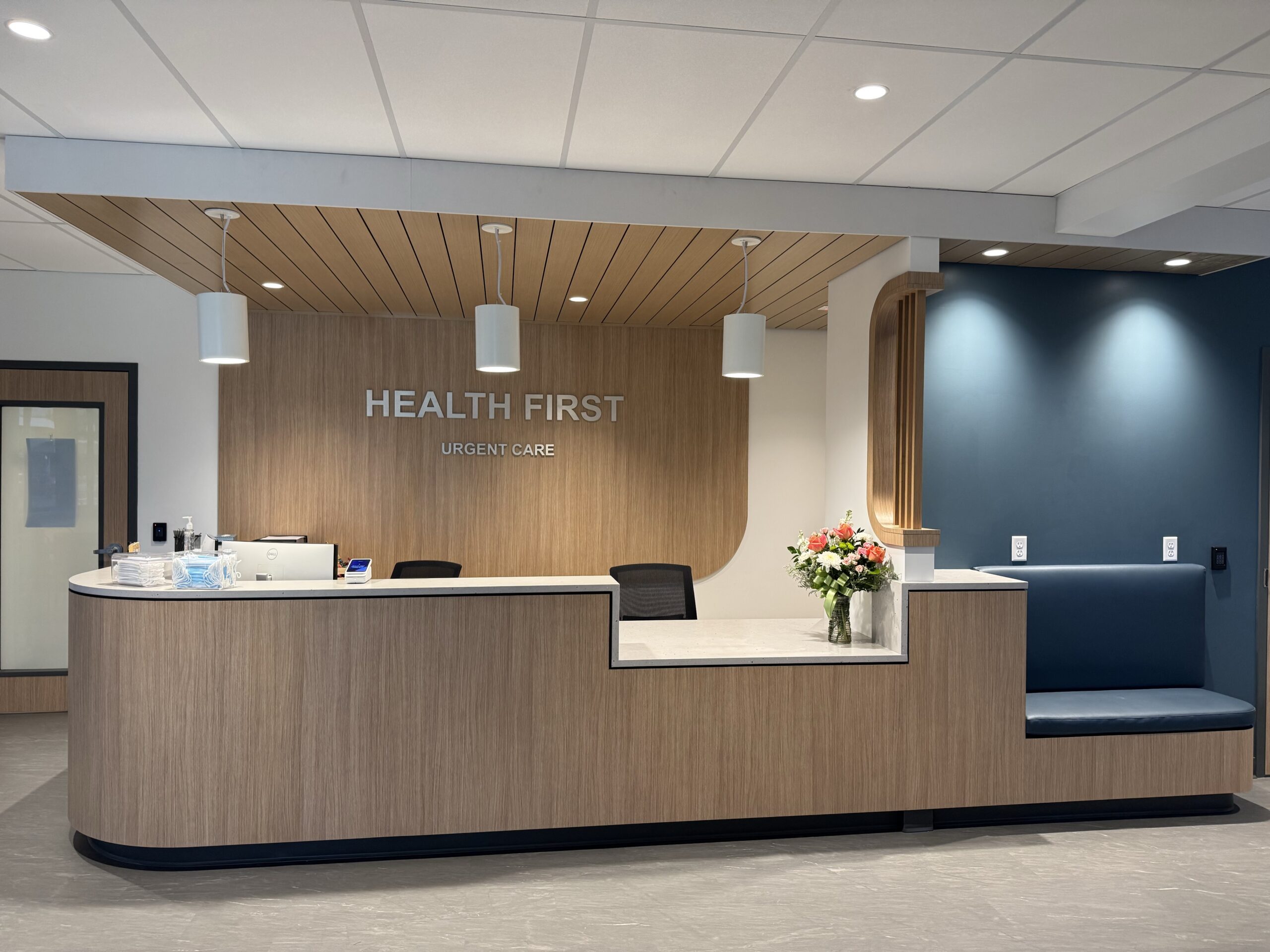
Employers should encourage drivers to schedule renewals before a medical certificate expires. Waiting until the final day leaves little room to address a missing document, an elevated blood pressure reading, or a needed follow-up with the driver’s regular healthcare provider. At Health First Urgent Care, DOT physicals are available as part of occupational health services for workers who need a practical local option.
Respirator and mask fittings
A mask fitting is different from simply handing out protective equipment. When a job requires a tight-fitting respirator, the worker must use a model and size that can create a proper seal. Facial hair, changes in facial structure, and the type of respirator can affect fit.
Employers should also distinguish between a medical evaluation for respirator use and a fit test. The medical evaluation addresses whether an employee can safely use a respirator. The fit test checks whether a particular respirator fits that employee. Both may be part of a respiratory protection program, depending on the workplace and the equipment required.
This service matters in settings where employees may encounter dust, fumes, airborne particles, or other respiratory hazards. Keeping fit-test records organized helps employers demonstrate that their safety process is active rather than merely written down.
Job-specific functional evaluations
Some roles require regular lifting, carrying, climbing, pushing, pulling, or standing for long periods. A job-specific functional evaluation can assess the physical abilities that matter for those duties. It should be based on actual, documented job demands rather than assumptions about a job title.
This can be useful before placement or when determining whether an employee can safely return to a demanding role after an injury or extended absence. The trade-off is that these evaluations require careful design. A test that is unrelated to essential job functions may not provide useful information and can complicate the hiring process.
Drug and alcohol testing programs
Drug and alcohol testing may be part of an employer’s safety program, contract requirements, or transportation compliance process. Common program types include pre-employment, reasonable suspicion, post-accident, return-to-duty, and random testing. The correct process depends on the industry, applicable rules, and the employer’s written policy.
Consistency is critical. Supervisors should know when testing is permitted, how to document a reasonable-suspicion decision, and who receives results. Employers should also be clear about collection procedures, chain-of-custody requirements, and how medical review processes work when they apply.
Not every workplace needs the same program. A small office may have different risks and requirements than a transportation, construction, or industrial employer. Before adding testing, review the policy with qualified legal, human resources, and compliance guidance.
Immunization and exposure-related screening
Healthcare, childcare, food service, and certain public-facing jobs may have immunization or exposure-related requirements. Depending on the position, employers may need vaccination records, tuberculosis screening, or other documentation tied to workplace standards.
These requirements should be driven by the job and applicable guidance, not a one-size-fits-all checklist. Employees should understand what is required, when it is due, and what documentation they need to provide. Clear communication prevents new hires from arriving on their first day with an incomplete file.
How to choose the right service mix
Start with the job description. Identify the physical demands, safety risks, driving requirements, protective equipment, and exposure concerns connected to the position. Then separate what is legally required from what is simply preferred by the company.
Next, standardize the process for people in the same role. If two employees perform the same essential duties, their screening requirements should generally be consistent. This supports fairness and makes it easier for managers to know which forms and appointments are needed.
Finally, think about logistics. A screening program only works if employees can complete it on time. Look for a provider that can handle common occupational visits, communicate required documentation, and offer access that works for busy schedules. For Tri-Cities employers, a nearby clinic in Richland or Pasco can reduce travel time for applicants, drivers, and existing staff.
Keep medical information separate from personnel files
Employers need confirmation that a worker has completed a required screening and whether the worker is cleared, restricted, or needs follow-up. They generally do not need a full copy of the employee’s medical details. Medical records should be handled carefully and stored separately from routine personnel records.
This is especially important when a screening identifies a condition that needs ongoing care. The employer’s role is to address job-related clearance and workplace safety. The employee should be directed to appropriate follow-up care for personal health decisions.
Build screening into the hiring and renewal calendar
The simplest way to avoid rushed compliance visits is to make screenings part of a repeatable workflow. Include required exams in the offer and onboarding process, track DOT certificate expiration dates, and set reminders well before renewals are due. Assign one person or team to manage forms, status updates, and clinic coordination.
A practical screening program does not need to be complicated. It needs to be tied to the work, applied consistently, and easy for employees to complete. When a new hire, driver, or safety-sensitive employee needs clearance, acting early keeps the work moving and gives everyone a clearer next step.