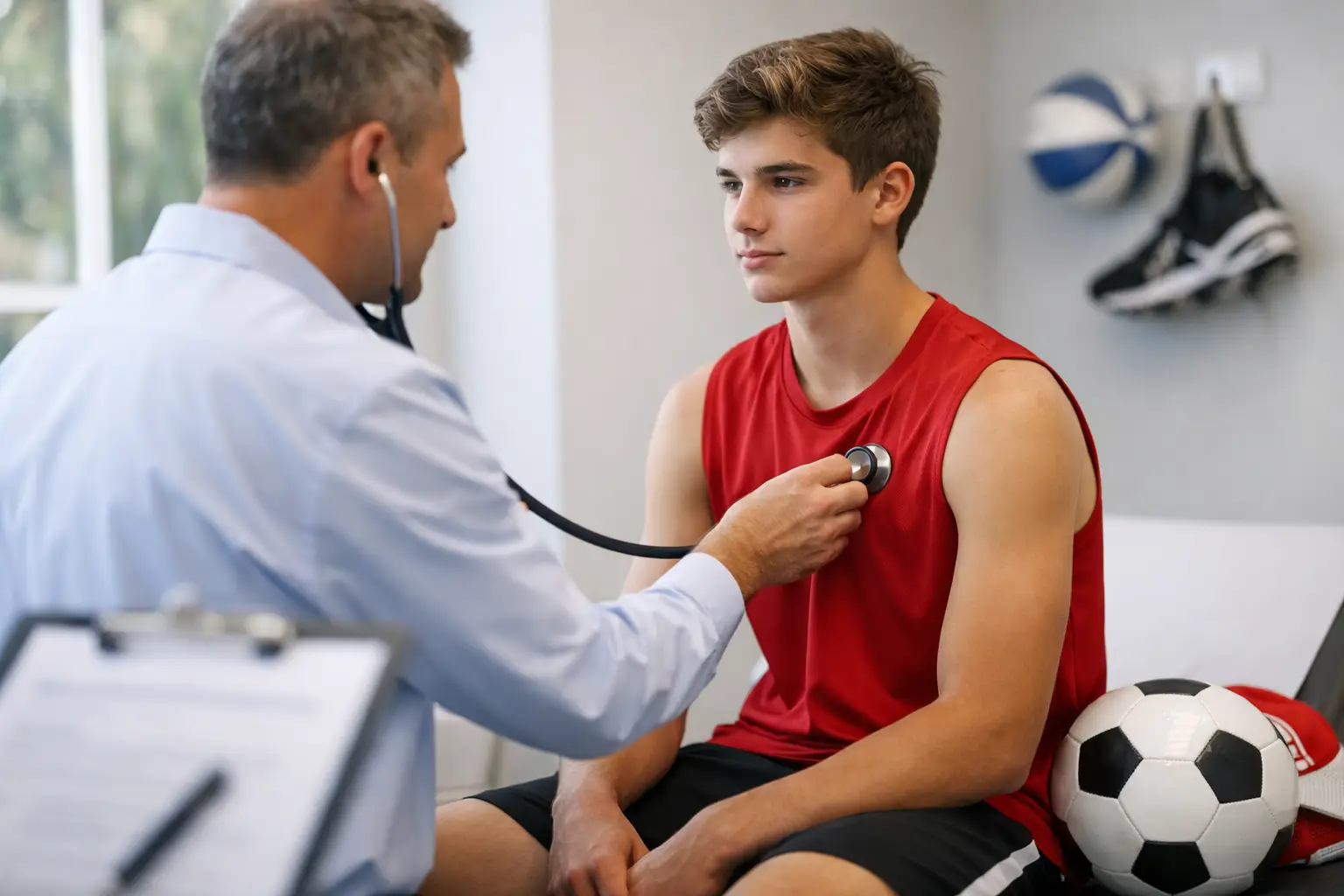
A missing signature can keep an athlete off the field even when they feel completely healthy. School districts, youth leagues, and club programs often require a completed form before the first practice or tryout. Knowing how to get a sports physical early gives your family time to handle paperwork, discuss health concerns, and avoid a last-minute scramble.
Planning a sports physical? Review Health First Urgent Care’s physical exam services, then call 509-300-1500 or use the shared Schedule Appointment link to confirm the current clinic and available options. Availability can vary by clinic and day.
A sports physical is usually quick, but it is not just a formality. The visit helps identify health issues that could affect safe participation in activities such as football, soccer, volleyball, cheer, track, wrestling, or basketball. For parents and athletes in the Tri-Cities, a walk-in clinic can be a practical option when a primary care appointment is not available before the deadline.
What Is a Sports Physical?
A sports physical, also called a preparticipation physical examination or PPE, reviews an athlete’s health history and basic physical condition before they take part in organized sports. The goal is to determine whether the athlete can participate safely, whether they need restrictions, or whether they should have follow-up care before playing.
The provider will ask about current symptoms, past injuries, medications, allergies, surgeries, and family health history. They will also check measurements and basic body systems that may affect sports participation. The appointment can identify concerns that may need attention before practices become more intense. The clinician will explain any next steps or activity guidance that applies to the athlete.
A sports physical is different from a routine checkup. A well-child visit or annual physical may cover broader preventive care, including growth, development, immunizations, and ongoing health needs. A sports physical focuses specifically on participation safety and the requirements of the school or league. In some cases, one visit can address both needs, but confirm what your school accepts before scheduling.
What Should You Bring to a Sports Physical?
Start by checking the requirements from the school, team, camp, or league. The form should explain who must complete it, whether a parent or guardian signature is required, how long the physical remains valid, and when the completed form is due. Requirements can differ between a school season, camp, club, or travel team, so do not assume last year’s form will work for a new activity.
Bring the form with the parent or guardian section completed before the visit. If the athlete is a minor, a parent or legal guardian should be available to answer health-history questions. Athletes should wear comfortable clothing that allows basic movement testing, such as bending, balancing, and checking joints.
Checklist:
- The school, league, camp, or team sports physical form
- A photo ID and insurance information, if applicable
- A list of medications, supplements, allergies, and known medical conditions
- Relevant records for past injuries, surgeries, concussions, asthma, heart concerns, or specialist care
- Glasses, contact lenses, hearing devices, braces, or other equipment the athlete normally uses
- Any additional records or instructions requested by the school, league, or clinician
Before leaving home, check that the family section is complete and that you know where the provider must sign. Keep a copy of the completed form for your records and confirm how the school or league wants it submitted.
What Happens During the Appointment?
The appointment usually begins with a health history questionnaire. This part matters as much as the physical exam. Be honest about symptoms and previous injuries, even if the athlete is worried that reporting pain could affect their season. A provider needs accurate information to make a safe decision.
Questions may cover chest pain during exercise, fainting, unexplained shortness of breath, dizziness, headaches, seizures, asthma, diabetes, bone or joint injuries, and prior concussions. The provider may also ask whether close relatives have had heart problems, sudden unexplained death, or certain inherited conditions at a young age.
During the exam, the provider may check height, weight, blood pressure, pulse, vision, heart and lung sounds, abdomen, posture, flexibility, strength, and joint movement. They may look for signs of scoliosis, evaluate an old knee or shoulder injury, or listen for breathing problems that could require an asthma action plan.
Many sports physicals take a relatively short time when the health history is straightforward and the required form is complete. The timing can change if the athlete has complex medical history, ongoing symptoms, or a condition that needs more evaluation. That is not a setback. It is an opportunity to get the right guidance before the demands of a season increase.
When a Sports Physical May Lead to Follow-Up
A provider may clear an athlete fully, clear them with recommendations, limit certain activity temporarily, or request additional evaluation. A follow-up recommendation does not automatically mean the athlete cannot play. It may simply mean the provider needs more information before signing unrestricted clearance.
For example, an athlete with exercise-related wheezing may need an asthma evaluation or medication plan. Someone with a recent concussion may need a step-by-step return-to-play plan. A history of fainting, chest pain, or a concerning family heart history may call for additional testing or a specialist evaluation before strenuous competition.
Old injuries also deserve attention. An athlete who says their ankle “usually hurts for the first few practices” may be dealing with instability or incomplete recovery. Playing through pain can turn a manageable issue into a longer absence. Discussing it during the physical gives the provider a chance to recommend treatment, a brace, rehabilitation exercises, or activity modifications.
How Early Should You Schedule a Sports Physical?
Try to arrange the sports physical several weeks before the first official practice or tryout. Starting early gives your family time to replace a missing form, discuss a health concern, or arrange follow-up if the clinician needs more information before completing the form. It also helps you avoid waiting until a seasonal deadline is close.
Health First Urgent Care has clinics in Richland, Pasco, and Kennewick. Review the locations page for the current clinic details, then call 509-300-1500 to confirm the location, current hours, form requirements, and sports-physical availability before you go. Walk-in intake and sports-physical availability depend on the clinic and day; posted hours do not guarantee intake or an appointment.
You can also use the shared Schedule Appointment link to review available options. The booking path does not guarantee a same-day slot. If the athlete has a different form or deadline for another league, confirm those requirements before traveling.
Need to confirm your plan? Review the physical exam services, check the clinic locations, or call 509-300-1500. You can also review options through the shared Schedule Appointment link. Confirm current availability before traveling.
Do Not Use a Sports Physical for an Active Emergency
A sports physical is meant for athletes who are stable and preparing for participation. It is not the right visit for severe symptoms requiring emergency care. Seek immediate help for chest pain, trouble breathing, fainting, severe allergic reactions, sudden weakness, a suspected neck or spinal injury, or a serious head injury.
For less urgent but still important concerns, such as a lingering sprain, possible concussion symptoms, fever, a rash, or worsening asthma symptoms, address the problem before asking for sports clearance. A signed form should reflect the athlete’s current health, not simply the date a team needs paperwork.
A sports physical is one small appointment with a bigger purpose: helping an athlete start the season prepared. Bring complete information, allow time for follow-up if needed, and treat honest answers as part of good sportsmanship. The best clearance is not just a signature – it is a plan for a safer season.