
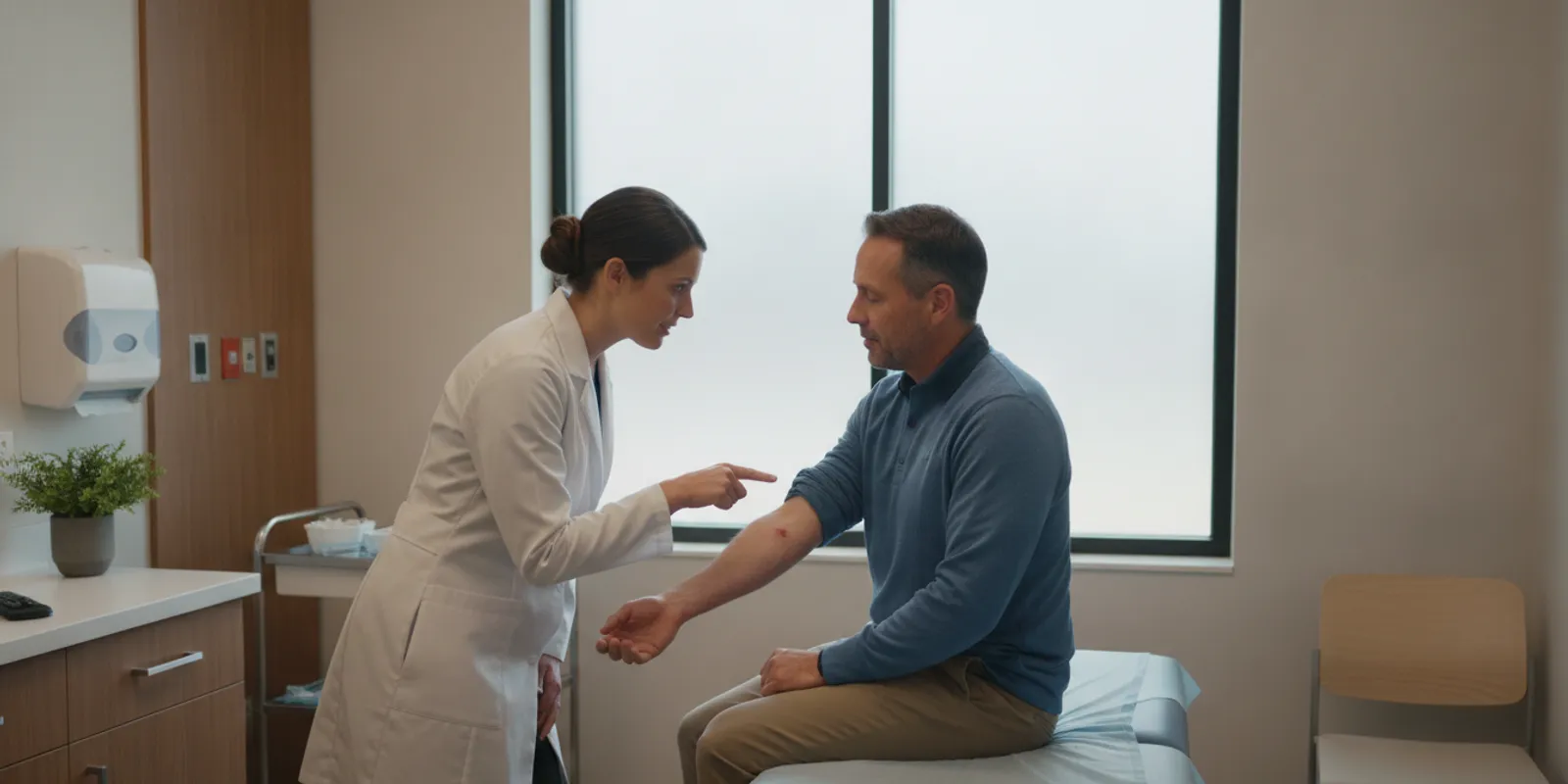
If you are comparing urgent care rash treatment cost, the first thing to know is that a skin evaluation may involve more than one billable service. The amount can depend on whether you have insurance, what the clinician determines is appropriate to evaluate the rash, and whether testing or other services are needed. Health First Urgent Care has clinics in Richland, Pasco and Kennewick, and this guide explains what to ask before care without assuming a diagnosis or a particular treatment.
What may be included in the cost of a rash evaluation?
A rash is a visible change in the skin, not a diagnosis by itself. Many different causes can look similar, and the right evaluation depends on details such as when it began, where it is located, whether it is spreading, and what other symptoms are present. A clinician may ask questions, examine the skin and decide whether any additional service is appropriate. The exact services cannot be determined from the word “rash” alone.
A bill may include a clinician evaluation and management charge, plus separate charges for services provided during the visit. Examples of services that may affect a bill include a test, a specimen sent to an outside laboratory, or supplies used during care. Whether any of these apply depends on the individual visit. A test is not automatically required for every rash, and discussing a service does not mean it will be performed.
Health First lists an urgent-care clinician evaluation and management charge of $165 for patients without insurance who are paying out of pocket. That is a specific self-pay charge, not a promised all-in price for every rash visit. The practice notes that labs, X-rays, equipment and other services may cost extra. A rash evaluation may or may not involve an additional service; the applicable fee schedule and services actually provided determine the charges. Review the self-pay pricing information and ask how the current terms apply to your situation.
The charge on a bill can also reflect how the visit is classified and which services are documented. This article cannot estimate an individual bill or confirm what a particular insurance plan will pay. If you are comparing possible costs, separate the base evaluation charge from possible additional services, then ask what is known before agreeing to a test or procedure.
What does Health First’s $165 self-pay charge cover?
The $165 figure applies to an urgent-care clinician evaluation and management for a patient without insurance who is using the self-pay option. It is not a universal price for every patient, a price for every service, or a guarantee that all care related to a rash will fit within that amount. It should not be treated as a complete visit estimate when a test, equipment or another service may be added.
If you are uninsured or choosing to pay cash, ask the clinic to explain the current self-pay terms for the visit you are considering. Be specific that you are asking about a rash evaluation, and ask whether the quoted amount is only the evaluation charge or includes any separate service you expect may be needed. If the answer depends on the clinician’s assessment, ask which parts can be explained in advance and which cannot be known until the evaluation.
It may help to write down the estimate in separate parts:
- The clinician evaluation and management charge.
- Any test or specimen handling charge that may apply.
- Any separate fee for equipment or supplies, if needed.
- Whether a specimen could be processed by an outside laboratory and billed separately.
- Any other service-specific charge the clinic can identify before care.
This list is a way to organize questions, not a promise that each item will be used or billed. The clinic can explain its listed charges and billing process, but the clinician determines what evaluation is appropriate based on the visit. If a service is recommended, you can ask what it is for, whether it is optional or clinically advised, and what charge information is available before it is performed.
Why can the cost vary from one rash visit to another?
Two people may both describe a rash but have different symptoms, histories and examination findings. One visit might involve an evaluation without testing, while another may call for a service to help assess a concern. The clinician’s assessment, the services actually provided and the applicable fee schedule all matter. A website article cannot determine in advance which category applies to you.
The location and extent of a rash can shape the questions a clinician asks. They may want to know whether it is limited to one area or appearing elsewhere, whether it itches or hurts, and whether there has been a recent exposure to a new product, medication, plant, insect or other possible trigger. Timing matters too: note when it first appeared and whether it is changing. These details are useful for the clinical conversation; they do not establish the cause or guarantee a specific test or treatment.
Other symptoms may affect the urgency of care or the evaluation. A fever, feeling generally unwell, increasing pain, swelling or a rash that is changing quickly deserves clear mention when you speak with a healthcare professional. Tell the clinician about known allergies, relevant medical conditions, medicines and recent changes to skin products. Do not stop a prescribed medicine or apply a new treatment solely on the basis of this article; ask a qualified clinician about your circumstances.
Age can also matter. A child’s rash should be considered in context, including the child’s age, overall condition and other symptoms. Before bringing a young child, contact the clinic to confirm the current age and service availability for the concern. Do not assume that a service is appropriate for every age or every type of rash at each location.
Finally, prices and billing arrangements are not the same thing as clinical decisions. A lower or higher expected charge does not indicate how serious a rash is. Seek care based on the symptoms and professional guidance, and ask billing questions separately so you can understand the charges without delaying emergency help when it is needed.
Could testing or an outside laboratory add to the bill?
Sometimes an evaluation includes a test; sometimes it does not. A clinician may decide that additional information is useful after reviewing the history and examining the patient. The specific test, if any, depends on the clinical situation and current service availability. Do not assume that every rash needs a laboratory test, and do not assume that all testing is performed or processed in the same way.
Health First lists various testing services on its site, but a list of services does not confirm that a particular test is appropriate for a particular rash or available at every clinic at every time. The practice also notes that some tests may be sent to an outside laboratory, such as LabCorp, and an outside lab may issue a separate bill. Ask whether a proposed test is performed at the clinic or sent out, who may bill for it, and whether the clinic can explain the expected charge before the specimen is collected.
For general service information, see Health First’s testing services and the services overview. These pages are not a substitute for confirming that a specific service is currently offered for your concern at your chosen clinic. If a test is suggested, you may ask:
- What question is this test intended to help answer?
- Is the test processed at the clinic or sent to an outside laboratory?
- Could the laboratory bill me separately?
- What is the known charge, and what part is not yet possible to estimate?
- When and how will results be communicated, and who should I contact with a question?
Result timing varies by test and workflow, so do not rely on a general estimate unless the clinic confirms it for the service being considered. A test result also does not replace follow-up instructions from a clinician. If symptoms worsen or you develop a serious warning sign while waiting, seek appropriate care rather than waiting for a result or a billing answer.
How can insurance affect what you may owe?
With insurance, the amount billed by a clinic and the amount you ultimately owe may be different. Depending on the plan and the service, you may have a copay, coinsurance, a deductible or a later patient balance. A test or outside laboratory may also be processed separately. Health First cannot promise that a particular plan will cover a visit, test or service, or that a specific amount will be paid by an insurer.
Before going, check your plan’s current rules and ask the clinic what it can confirm about its billing process. Verify coverage for both the visit and any service you are considering; coverage for one does not necessarily settle coverage for another. Ask whether you may receive a separate statement from an outside lab. The insurance information page offers general context, but your insurer is the source for plan-specific benefits and cost-sharing decisions.
Keep a note of the date and the name or department of anyone you speak with, along with the question asked and the answer given. If an estimate is conditional, write down the condition. For example, it may depend on which service is clinically appropriate or how the insurer processes a claim. This record can make it easier to compare the clinic’s explanation with an insurer statement or a later bill. It is not a guarantee that a quoted estimate will equal the final amount.
When you receive a bill, compare it with any explanation of benefits from your insurer and with the services listed on the statement. An explanation of benefits is not itself a bill. If an amount is unclear, contact the party that issued the statement and ask which service it relates to, whether it has been processed by insurance, and what steps are available to discuss a concern. If a separate outside-lab bill arrives, contact that lab about the charges on its statement.
What should you ask before a rash evaluation?
A short, focused conversation can help you understand both logistics and billing. You do not need to know the cause of the rash to ask practical questions. Describe what you are seeing in plain terms, mention how long it has been present and share any symptoms that seem important. If you are calling for a child or another family member, explain their age and condition so staff can help direct your question appropriately.
For the financial part, ask whether the $165 self-pay evaluation charge applies to your situation if you are uninsured and paying out of pocket. Ask whether it is separate from tests, equipment, supplies or other services. If you have insurance, verify benefits with your plan and ask what the clinic can explain about its billing process. If a test is discussed, ask whether it may involve an outside laboratory or a separate statement.
You can also ask about what cannot be determined before the clinician evaluates you. Staff may not be able to say in advance whether a test is needed, what the final bill will be, or whether a particular service is available at a particular location at that time. An honest estimate may have limits. Ask the clinic to distinguish a known charge from a possible charge or a question that depends on clinical assessment.
Useful questions include:
- Is the walk-in service available for my concern and age today, subject to clinic availability?
- What is the current evaluation charge for my payment situation?
- Are tests and other services billed separately from the evaluation?
- If a test is recommended, can you explain its purpose and possible charge before it is done?
- Could an outside laboratory bill me separately?
- What should I do if the rash becomes worse or a new symptom appears?
These questions are meant to clarify the visit, not to negotiate a clinical decision. If the clinician recommends an evaluation or test, ask them to explain the reason and your options. If there is a serious symptom, deal with the immediate health need first and return to billing questions when it is safe to do so.
How can you prepare for the visit?
Preparation can make the conversation more efficient. Write down when the rash began, where it first appeared and how it has changed. Note whether it is spreading, itchy, painful, warm or accompanied by other symptoms. If it appeared after contact with a new soap, lotion, detergent, plant, food, insect or other possible trigger, record that information. A timeline is often more useful than trying to guess a diagnosis.
Bring a list of relevant medications and known allergies, and mention recent changes. If the rash comes and goes or looks different at different times, a clear photo taken in good light may help explain what you observed, though it does not replace an examination. Do not delay urgent care just to collect photos or records. For a child, bring the caregiver information needed to discuss the child’s symptoms and relevant health history.
Have your insurance information available if you plan to use insurance. If paying out of pocket, tell the clinic before the visit so you can ask about the current self-pay charge and possible additional fees. If you have already spoken with an insurer or clinic representative, bring your notes. Separate what has been confirmed from what remains uncertain, especially if a possible test or outside lab was mentioned.
Health First has clinics in Richland, Pasco and Kennewick. Use the clinic locations page to review location information, and confirm the current service availability and relevant details before you go. Walk-in care is subject to availability; a walk-in option does not guarantee immediate intake or a particular wait time. Clinic-level service availability can vary, so do not assume every service is offered at every location.
If you are considering a clinic visit, you can also review the illness services information for general context. Online service descriptions do not diagnose a rash or confirm whether a clinician will recommend a particular service. For a concern in a child, call ahead to check current age and service availability, especially if you are unsure whether urgent care is appropriate.
Before leaving home, keep the cost and care questions separate in your notes. Under cost, list the payment path you expect to use, the amount the clinic identifies as the evaluation charge, and anything that might be billed by a different organization. Under care, list the rash timeline, related symptoms, relevant allergies or medicines, and the questions you want the clinician to answer. This makes it easier to give a clear history without treating a cost estimate as medical advice.
If you have used a new product or suspect a possible exposure, bring the product name or a photo of its label when practical. Do not bring anything that could cause harm or delay care. If the rash has changed since you first noticed it, describe the progression as accurately as you can rather than trying to interpret what it means. A clinician can decide whether the history and examination are enough or whether an additional step is worth considering.
Also plan for the possibility that the clinic may not be able to provide a particular service at that time. Walk-in care is subject to availability, and service availability can differ by clinic. Confirm the location and current availability if that affects your decision. If care at an urgent-care clinic is not appropriate for the symptoms, ask where you should seek the right level of help. Serious or life-threatening concerns should go to emergency services, not wait for an appointment or a cost estimate.
When is urgent care not the right place for a rash?
A skin concern can sometimes be part of a more serious health problem. Call 911 for chest pain, shortness of breath or any life-threatening condition. Do not drive yourself or a child to an urgent-care clinic when emergency help is needed.
Seek prompt medical guidance for a rapidly worsening rash, significant swelling, severe pain, a rash with a high fever or a patient who appears very ill. This list is not a complete way to judge severity, and it cannot tell you what is causing a rash. If you are uncertain about a potentially serious symptom, contact a qualified healthcare professional or emergency services for direction rather than relying on a cost guide.
For a baby or young child, take changes in behavior, feeding, alertness or breathing seriously and seek appropriate medical advice. Age and the child’s overall condition matter. Health First’s walk-in service is for urgent-care needs subject to availability, and you should confirm current age and service availability. A general rash article cannot determine whether a child’s symptoms are safe to monitor at home.
Cost questions are important, but they should not delay emergency care. If there is no life-threatening sign and the concern appears suitable for urgent-care evaluation, you can ask the clinic about availability and billing while arranging care. If symptoms change while you are waiting, reassess the urgency and seek emergency help when necessary.
How can you compare possible costs fairly?
When comparing care options, compare like with like. A quoted evaluation charge may not include tests, equipment, outside-laboratory processing or other services. One estimate may describe only a base charge, while another may include a different set of services. Ask each provider what the quoted amount covers, what could be separate and what cannot be estimated before an evaluation.
For an insured visit, compare the likely patient responsibility under your plan rather than assuming the billed amount is your final cost. Confirm whether the provider and any outside lab are handled under your plan’s rules, and ask the insurer about copays, coinsurance, deductible status and relevant service coverage. The clinic may explain its own billing, but only the insurer can answer plan-specific coverage questions. Even an insurer estimate can be subject to claim processing and the final services provided.
For a self-pay visit, compare the evaluation charge separately from potential add-ons. Health First’s listed $165 charge is for a clinician evaluation and management for urgent-care patients without insurance, with labs, X-rays, equipment and other services potentially extra. Do not interpret that amount as an all-in rash-treatment price or as proof of savings against another provider. Ask for current information about the services relevant to your situation.
It may also be useful to consider practical factors beyond a single number: whether the clinic is available for your concern, how to reach the correct location, what information you need to bring and how to get follow-up instructions. Do not trade away timely care for an incomplete estimate when symptoms are worsening or emergency warning signs are present. A fair comparison makes the scope and uncertainty of each quote clear.
What should you do after receiving a bill?
Read each statement carefully and identify who sent it. A clinic statement and a laboratory statement may cover different services. Check the service date, description and amount, then compare them with any estimate, receipt, insurer explanation of benefits or notes you kept. If something does not make sense, ask the billing party to explain the line item and whether it has been submitted to insurance.
If you believe a charge is incorrect, ask what documentation is available and how to request a review. Keep copies of statements and correspondence, and record the date of each conversation. For an insurance question, contact the insurer using the contact information on your plan documents. For an outside laboratory charge, contact the laboratory named on the bill. These steps help route the question to the organization that can explain that particular statement.
Follow the clinician’s care instructions separately from the billing process. If the rash worsens, new symptoms develop or you are worried about the patient’s condition, seek medical advice; do not wait for a billing discussion to be resolved. If you receive instructions to arrange follow-up, clarify where and when to do so. A bill does not provide a diagnosis, and a charge alone does not indicate the seriousness of the condition.
Review Health First clinic locations
Frequently asked questions
Is the $165 charge the total cost of a rash visit?
No. It is the listed urgent-care clinician evaluation and management charge for patients without insurance who are paying out of pocket. Labs, X-rays, equipment and other services may cost extra, and the charges depend on services provided. Ask about the current terms for your situation.
Will every rash evaluation include a test?
No. Whether a test is appropriate depends on the clinician’s assessment and the specific concern. If a test is recommended, ask what it is intended to assess, whether it is processed at the clinic or sent to an outside laboratory, and what charge information is available.
Can I know the final bill before I am evaluated?
Not always. A base charge may be explained in advance, but the clinician’s assessment determines whether additional services are appropriate. Insurance processing and outside-lab billing can also affect the final amount. Ask which costs are known and which depend on decisions or processing that have not happened yet.
Does insurance guarantee that I will have no out-of-pocket cost?
No. Coverage and patient responsibility depend on your plan and the services provided. Copays, coinsurance, later balances or separate outside-lab bills may apply. Verify benefits with your insurer and ask the clinic what it can explain about its billing process.
Should I bring a child with a rash to urgent care?
The appropriate setting depends on the child’s age, symptoms and overall condition. Confirm current age and service availability with the clinic. For a life-threatening condition, call 911. If the child seems very ill or symptoms are changing quickly, seek prompt medical guidance rather than relying on a general article.
Understanding urgent care rash treatment cost starts with separating the evaluation charge from possible tests, supplies, insurance cost-sharing and outside-lab bills. Ask what is known, verify current clinic and plan details, and seek emergency help for life-threatening symptoms.