
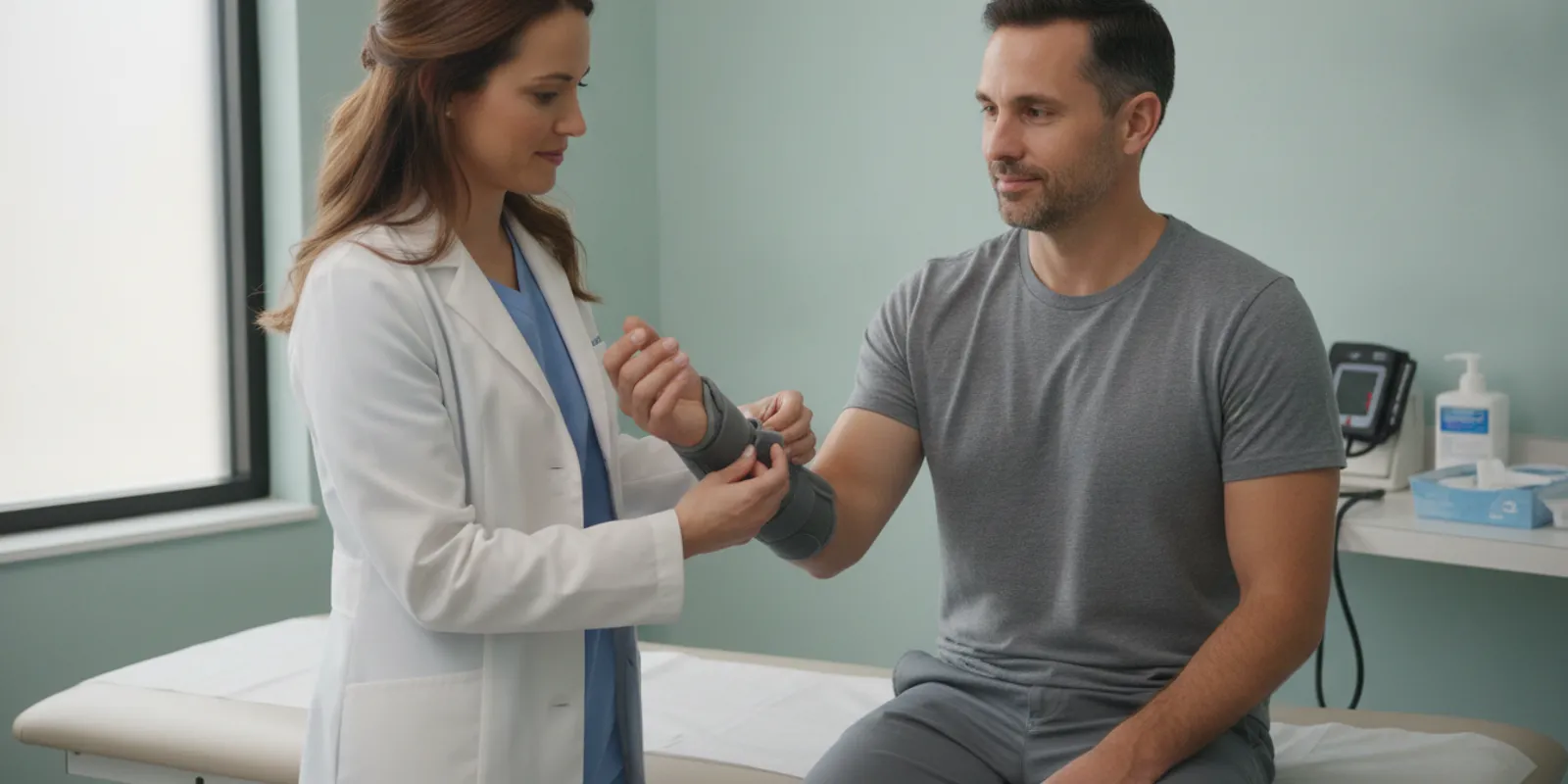
A wrist, ankle, or other minor injury may need more than a support device. When considering an urgent care splint cost, remember that a bill may include an evaluation, a splint or other equipment, imaging, and additional services. The exact services depend on the injury and current clinic capabilities.
Review injury care information
What can an urgent-care splint bill include?
A splint supports an injured area while limiting movement. The device is only one possible part of a visit. A clinician may ask what happened, when symptoms began, what makes them worse, and whether there are relevant health concerns. The clinician then examines the affected area. That assessment helps determine what care may be appropriate and whether another level of care is needed.
Billing can reflect each service provided. Possible line items include the urgent-care evaluation, equipment, an X-ray, or another service. Not every patient needs every item. Do not assume a general visit charge includes supplies or testing unless the clinic confirms those services are included in the quoted amount.
It helps to separate two questions: what services are clinically appropriate, and how they are billed. A clinician evaluates the injury; the patient or caregiver can ask how recommended services may appear on the bill, when circumstances allow. Cost questions do not determine which care is medically suitable.
What does the $165 self-pay charge cover?
Health First lists a $165 urgent-care charge for patients without insurance. This is the urgent-care charge, not an all-in visit price. Labs, X-rays, equipment, and other services may cost extra. If a splint is provided, ask whether equipment is billed separately and what additional services could appear as line items.
For current information, review Health First’s self-pay pricing details. The $165 amount is not a prediction of the final cost for a particular injury. The services provided and applicable fee schedule affect the bill.
For example, a self-pay patient should not assume the evaluation charge includes a device or imaging merely because those services occur during the same visit. Ask whether the published charge applies to the evaluation and what additional services may be billed separately. An exact total may not be clear until the injury has been assessed and the services are known.
Why can two splint visits cost different amounts?
People may use the word “splint” for different injuries and devices. One visit may involve an evaluation and a basic support. Another may involve imaging or different equipment. The clinician’s assessment and the services actually provided determine which line items apply.
- Evaluation: The clinician asks about the injury and examines it to decide what care is appropriate.
- Equipment: A device may be billed separately from the urgent-care charge. The type of support can differ by body area and situation.
- Imaging: An X-ray may be considered for some injuries. Whether it is appropriate depends on the evaluation and service availability.
- Other services: Additional care may add charges when medically appropriate and provided.
These are possible components, not a promise that every clinic stocks every device or offers the same services for every injury. Health First has clinics in Richland, Pasco, and Kennewick. Confirm current location-specific services before relying on availability. The clinic locations page can help identify a location.
Could imaging or another service add to the bill?
Possibly. An X-ray is separate from an evaluation or equipment charge, and not every injury needs one. Health First lists X-ray and laboratory services, but confirm the relevant service and its availability for your situation and chosen clinic. If a specimen is sent to an outside laboratory for a service, a separate bill may apply; that may not be relevant to a splint visit.
Ask what a proposed test is intended to assess, whether it is available at the location, and whether it may be billed separately. Review the general services information and X-ray and lab information to frame questions. A test is not automatically part of every injury evaluation.
How can insurance affect what you may owe?
Health First does not promise participation or coverage for every plan or service. Your cost may depend on plan rules and the services provided. Copays, coinsurance, later balances, or an outside-lab bill may apply. Contact your insurer to ask whether the clinic and relevant service are covered and what cost-sharing may apply.
For general guidance, see insurance information. A plan’s estimate is not necessarily a final bill. Keep notes about whom you contacted, what service you asked about, and any reference number provided.
Use the most specific description you have when asking your insurer. Ask separately about the evaluation, imaging if recommended, and possible equipment charges. Coverage for one service does not establish coverage for another. If the insurer cannot confirm an amount in advance, record that limitation instead of treating a general answer as guaranteed.
What should you ask before receiving a splint?
You can ask practical questions before a service when circumstances allow. Staff may not be able to determine every charge until evaluation identifies what is needed, but questions can clarify billing.
- What is the urgent-care charge for someone without insurance?
- Is equipment billed separately?
- Could an X-ray or another service be recommended, and how would it be billed?
- Does this location currently provide the service or equipment needed?
- If I use insurance, should I verify coverage and cost-sharing with my plan?
- Will each service appear as a separate line item?
- If a service is unavailable here, what should I do next?
Take notes: date, service discussed, whether an amount was confirmed or estimated, and whom you spoke with. This makes it easier to compare the explanation with an itemized bill later. Services are billed according to the fee schedule, with each service listed as a line item. Verify current terms; the self-pay charge does not guarantee the final total.
How can you prepare for a cost conversation?
Before contacting a clinic, note when and how the injury happened, which body part is affected, and what symptoms are present. You do not need to decide whether imaging or a particular device is needed. Describing the situation helps staff understand your question, while a clinician assesses the injury.
If you plan to use insurance, have your member information available and contact the insurer about the clinic and services you want to ask about. If paying without insurance, ask about the current urgent-care charge and whether equipment or testing may be separate. When comparing providers, use the same list of possible services for each conversation.
When reviewing a bill, compare its line items with the services provided and the information you received. If a charge is unclear, contact the billing office and ask which service it represents. If you believe an insurer processed a claim incorrectly, contact the insurer as well. Avoid comparing only headline charges when one estimate includes imaging or equipment and another does not.
Where can you seek care for an injury?
Health First Urgent Care provides in-person urgent care in the Tri-Cities through clinics in Richland, Pasco, and Kennewick. Walk-in care is subject to availability, and services can vary by location and situation. Check the locations information and review the injury care page.
A minor-injury clinic may not be the right setting for every injury. If you have a life-threatening condition, call 911 or seek emergency care. Do not delay emergency help to compare prices or wait for a routine visit.
How do clinic location and availability matter?
A price question has two parts: whether a service is offered at the location you plan to visit, and how it is billed if provided. A general service listing does not guarantee that a particular device or imaging option is available at every clinic at every time. Walk-in care is also subject to availability.
Check the locations page for the Richland, Pasco, and Kennewick clinics. For a location-specific question, describe the injury in general terms and ask whether the service is currently offered there. If the answer is uncertain, ask what next step is appropriate rather than relying on a broad service listing as a guarantee.
Location matters when comparing estimates. One conversation may describe an evaluation only, while another includes evaluation plus X-ray or equipment. List the services included in each answer so you are not comparing different bundles as if they were the same price.
How can different billing situations differ?
The same injury can lead to different billing questions depending on payment method and services provided. These examples are not estimates; they show why each component should be discussed.
- Self-pay, evaluation only: Ask whether the $165 urgent-care charge applies. Do not assume it includes a splint or imaging.
- Self-pay, evaluation plus equipment: Ask whether the device is a separate line item. The total depends on the fee schedule and services provided.
- Insurance with imaging: Check plan rules for the evaluation and imaging separately. Deductibles, copays, coinsurance, or later balances can affect what you owe.
- Outside service: Ask whether another provider is involved and may bill separately. This is not necessarily part of a splint visit.
These examples cannot establish eligibility, coverage, or an exact charge. The final bill follows the services delivered and applicable fee schedule or insurance processing.
How should you organize an estimate before a visit?
A written estimate is most useful when it separates visit components instead of treating “splint care” as one fixed package. List the evaluation charge, possible equipment charge, whether an X-ray is available and might be recommended, and other possible services. You may not get a final amount before an examination, but you can learn what is known and what remains uncertain.
Use four columns in your notes: service, quoted amount or status, whether confirmed, and who gave the information. For example: “urgent-care charge: $165 for uninsured patient; published charge; verify current terms.” For equipment, note “separate charge: not yet known.” For imaging, note “only if appropriate and provided; price and availability to confirm.” This keeps an unknown from becoming an assumed included service.
If calling beforehand, keep questions narrow and do not ask staff to diagnose the injury by phone. You could say, “I have a minor wrist injury and want to understand how evaluation and equipment are billed. Is the self-pay charge for the urgent-care service only, and how can I ask about equipment or X-ray charges if recommended?” Staff may explain published terms, while a clinician determines suitable care after evaluation.
When calling an insurer, identify the clinic and service. Ask whether the answer is a benefit explanation or a guaranteed patient amount; the final share can depend on claim processing and services submitted. Record the call date and reference number. If the insurer confirms evaluation benefits but not an equipment charge, keep those answers separate.
What details help explain the type of splint visit?
“Splint visit” can describe different situations. A finger support is not necessarily the same item as a device for an ankle or wrist. A patient may arrive asking for a splint, but the clinician first needs to understand what happened and examine the affected area. This cost guide cannot tell you which device, if any, is appropriate for an individual injury.
For a service-availability question, give basic context: the body area, when the injury happened, and whether you are asking about evaluation, imaging, or equipment. Do not infer a diagnosis from a device being discussed. Do not assume a particular size or style is stocked at a chosen clinic; confirm current availability there.
A useful sequence of questions is:
- Is this location seeing walk-in patients for minor injuries, subject to availability?
- Does the location currently offer the service I am asking about?
- If equipment is recommended, is it billed as a separate line item?
- If imaging is considered, how is it billed, and does the location offer it?
- Where can I review current self-pay terms?
These questions distinguish general availability and billing information from the clinical decision made during an evaluation. If a detail cannot be confirmed in advance, record it as uncertain and ask what source can clarify it.
How can you compare two cost explanations?
Suppose one estimate mentions only an evaluation and another mentions evaluation, imaging, and a possible support device. The second may seem higher, but the answers describe different services. List what each estimate includes and excludes. A lower headline charge does not necessarily mean a lower total for the services ultimately provided.
For self-pay, put the published $165 urgent-care charge in its own row and list equipment, imaging, labs, or additional services separately. The amount applies to the urgent-care charge for patients without insurance; it is not a promised total for every visit. Ask whether each possible service has a separate fee and whether the information is current. Mark unconfirmed items as unknown.
For insurance, distinguish the clinic charge from the insurer’s estimate of your share. A plan may apply different cost-sharing rules to different services. A later balance or separate outside-provider bill may also apply. Ask whether an estimate covers only the evaluation or also the imaging and equipment discussed. Coverage for one line does not establish coverage for all of them.
Use this worksheet as a prompt, not as a quote:
- Evaluation: What charge applies to my payment method?
- Equipment: Is a splint or support billed separately if provided?
- Imaging: Is an X-ray offered here, and how is it billed if recommended?
- Other services: Could another service or outside bill apply?
- Uncertainty: Which amounts depend on the examination or claim processing?
Use the same worksheet for every conversation. It helps identify whether you are comparing the same visit components while leaving the medical decision to the clinician.
What should families keep in mind when a child is injured?
A parent or caregiver may be asking about cost while deciding what information to bring and where to seek help. Keep cost questions separate from decisions about urgency. Describe the child’s injury and symptoms when contacting a clinic, and ask whether the location currently provides the relevant service. Age and injury details can affect what care is suitable, so do not assume a service is appropriate for every child or that every location has the same equipment.
Before a visit, note when the injury occurred, what activity preceded it, which area is affected, and any changes since then. Bring relevant patient and insurance information if available. Details of prior evaluation or imaging may help the clinician understand the situation; do not delay emergency care to collect paperwork.
For cost information, ask whether the $165 uninsured urgent-care charge applies to the evaluation and whether equipment or imaging may be billed separately. If using insurance, verify the clinic and service with the plan. This helps prevent treating a general visit charge as though it covered every service.
Health First provides in-person urgent care in Richland, Pasco, and Kennewick, with walk-in care subject to availability. If a condition is life-threatening, call 911. For other concerns, the clinician’s assessment—not a cost worksheet—determines the appropriate next step.
What information belongs on an itemized bill review?
Read each statement line separately rather than comparing only the total with a phone estimate. List the service description, billed amount, date, and claim or account reference. Match each line to a service you recognize, such as evaluation, X-ray, or equipment. Billing terms may be unfamiliar, so ask for an explanation rather than guessing.
If the bill includes an insurer payment or adjustment, compare it with the plan’s explanation of benefits. Check whether the plan processed each service, applied cost-sharing, or left a balance. If the insurer document and clinic statement do not appear to match, contact both parties with the date and line item in hand.
Keep a record of the date you called, whom you spoke with, what was explained, and whether more paperwork is needed. Keep copies of written questions and answers. This helps when resolving a question takes more than one conversation.
Do not assume a bill is incorrect just because it differs from a general estimate. The estimate may have covered fewer services, the services may have changed, or insurance processing may have affected the balance. You can still ask what each line represents and how it was calculated under the fee schedule or plan processing.
When is a price comparison not the first priority?
Cost planning matters, but it should not delay emergency help for a life-threatening condition. Call 911 or seek emergency care. This guide addresses possible charges for a minor-injury visit and splint equipment; it cannot determine whether a specific injury is minor or whether urgent care is the right setting.
For other concerns, describe what happened to a suitable care provider. Walk-in availability and services vary by location and situation. If a clinic cannot provide a needed service, ask what next step is appropriate. If a specific device or test matters to your plans, check current location-specific availability rather than relying on a general web listing.
Cost comparison is most useful once you know what each price represents. A clear answer may be the evaluation charge with equipment and tests billed separately, rather than a single all-inclusive number. This helps you plan without substituting a price estimate for a clinical assessment.
How can you find current Health First information?
Health First Urgent Care has clinics in Richland, Pasco, and Kennewick. Use the locations page and confirm service availability for the location you are considering. The injury information and X-ray and lab information can help frame questions. A general page does not guarantee a specific device or test is available at every clinic.
For self-pay terms, review current pricing information. For plan questions, consult insurance information and verify benefits directly with your insurer. These pages can orient your questions but cannot predict an exact final bill.
Make sure any answer is specific to the date, location, payment method, and services you are asking about. If a detail changes, an estimate may not apply. Focus on understanding each line item and getting an appropriate evaluation for the injury.
Review current pricing information
When you need care, focus first on getting the injury assessed appropriately, then ask how recommended services may be billed. Confirm current availability and charges with the clinic and your insurer before relying on an estimate.