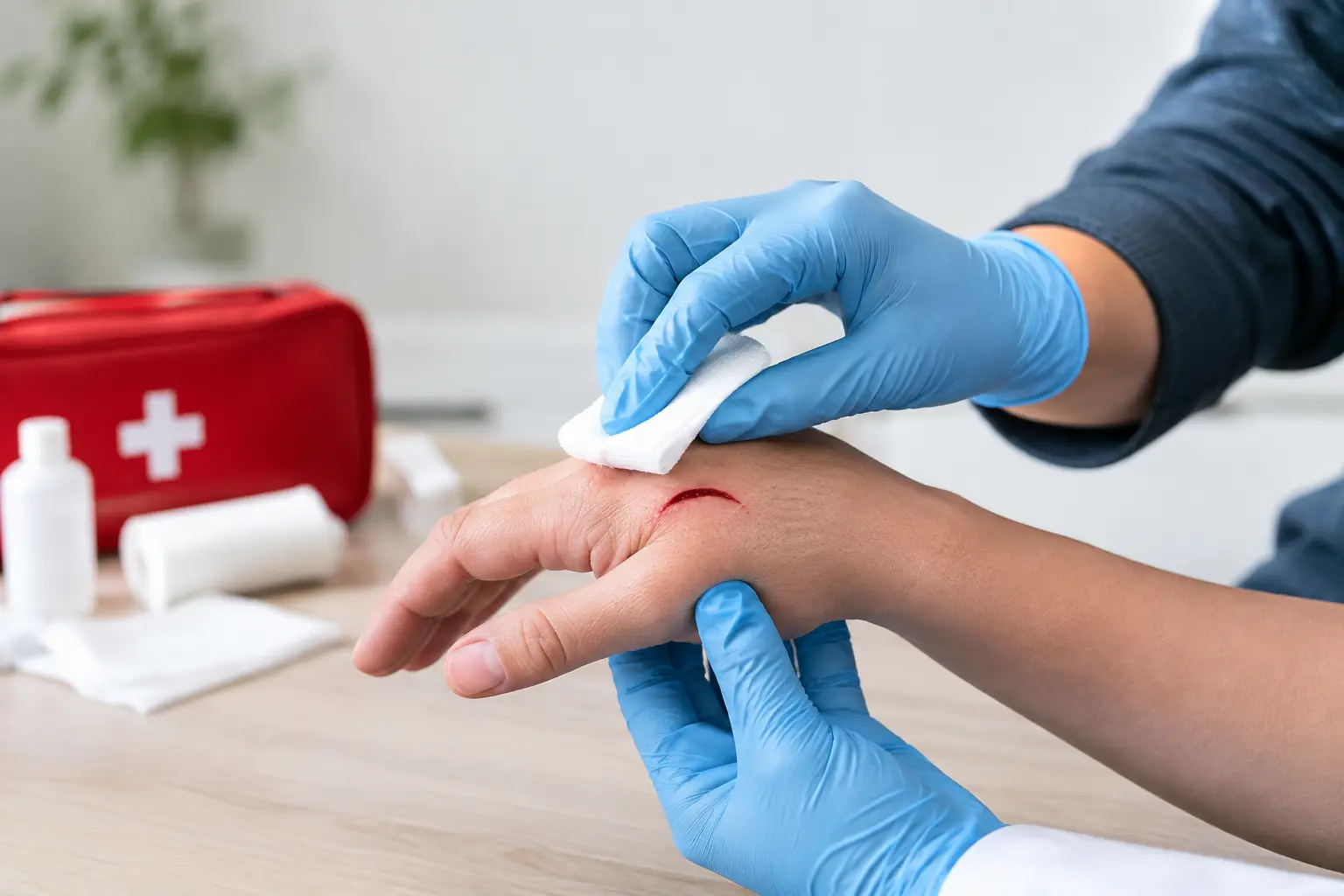
A kitchen knife slips, a child falls on pavement, or a work project ends with a sharp edge where it should not be. The first question is usually simple: when do cuts need stitches? The answer depends on more than how much blood you see. A cut may need closure because of its depth, location, shape, contamination, or the risk that it will heal poorly without treatment.
For many minor cuts, steady pressure, cleaning, and a bandage are enough. But waiting too long on a wound that needs medical care can raise the risk of infection, scarring, loss of function, or continued bleeding. Knowing what to look for helps you make a faster decision.
Signs a cut may need stitches
A cut may need stitches, skin adhesive, staples, or another closure method if the edges cannot stay together on their own. Gently bring the skin edges toward each other without forcing them. If the wound gaps open, especially when the nearby body part moves, it is worth being evaluated.
Depth matters, too. Seek same-day care if you can see yellow fatty tissue, muscle, tendon, bone, or anything deeper than the surface layers of skin. A wound can be small in length but still deep enough to need treatment.
Bleeding is another practical clue. Apply firm, direct pressure with clean gauze or cloth for 10 to 15 minutes without repeatedly lifting it to check. If bleeding does not stop, soaks through material quickly, or spurts with a pulse, get urgent medical help. Pulsing or uncontrolled bleeding can be an emergency.
Cuts in certain locations deserve extra attention because those areas move often, scar more noticeably, or involve important structures. This includes cuts on the face, eyelids, lips, hands, fingers, joints, genitals, and feet. A cut across a knuckle may open every time you bend your hand. A cut near the eye or on the lip may need precise closure for the best possible healing.
You should also have a cut checked if it was caused by a dirty or rusty object, broken glass, an animal or human bite, a fishhook, or a puncture. These injuries may leave debris behind or carry a higher infection risk. Do not dig into the wound to remove deeply embedded material.
How deep is too deep for a cut?
There is no reliable at-home ruler test for whether a wound needs stitches. A narrow puncture can be deeper than it looks, while a longer scrape may only affect the top layer of skin. Instead, look at the wound’s behavior and what is visible inside it.
A superficial cut usually has edges that rest together, stops bleeding with pressure, and does not limit movement or sensation. It may sting and look alarming, but it can often be managed at home after thorough cleaning.
A deeper cut may have separated edges, persistent bleeding, visible tissue beneath the skin, numbness, weakness, or pain when you move the area. If a finger feels numb after a cut, you cannot fully bend or straighten it, or the cut is near a tendon or joint, do not assume it is minor. Nerves and tendons can be injured even when the skin opening looks modest.
Timing matters when stitches are needed
Most wounds that need closure should be assessed as soon as possible, ideally within several hours. The exact window depends on the wound, its location, how clean it is, and your health history. Clinicians may be able to close some clean cuts later, particularly in areas with good blood supply, but the decision becomes more complicated as time passes.
Do not delay care just because the bleeding has slowed. By the time a wound begins to dry or its edges start sticking in an open position, closure may be more difficult. If you are unsure, it is better to have a clinician examine the cut the same day.
There is also a trade-off: closing a contaminated wound too soon can trap bacteria inside. In those cases, a clinician may clean the area carefully, use a different treatment plan, or allow the wound to heal in a way that reduces infection risk. Stitches are not automatically the best choice for every deep cut.
What to do before you get medical care
Start by washing your hands. Apply direct pressure with clean gauze, a clean towel, or cloth. Keep the injured area elevated above heart level when possible, especially for hand, arm, foot, or leg injuries.
Once bleeding is controlled, rinse the wound under clean running water. Soap can be used on the surrounding skin, but avoid pouring harsh products such as hydrogen peroxide, rubbing alcohol, or iodine deep into the wound. They can irritate healthy tissue and slow healing.
If you see an object stuck in the wound, leave it in place unless it is very small and sitting loosely on the surface. Cover around the object with clean material and seek care. Pulling out a deeply embedded object can increase bleeding or cause additional damage.
Use a clean, nonstick dressing for the trip to the clinic. Avoid eating or drinking a large meal if you think the injury may require a more involved procedure, particularly after a significant hand injury or facial wound. Most simple laceration repairs do not require fasting, but clinical needs can vary.
When a cut needs emergency care
Urgent care can treat many non-life-threatening cuts, but some injuries require emergency services right away. Call 911 or go to the emergency department for severe or uncontrollable bleeding, a deep wound with exposed bone or muscle, loss of consciousness, a major crush injury, or a cut with signs of poor circulation below the injury.
Emergency care is also appropriate if the injury involves the eye itself, if there is a serious facial injury, or if you have weakness, numbness, or inability to move part of the body after the cut. A wound caused by a high-pressure tool, such as a paint or grease injection injury, is an emergency even if the skin opening is tiny.
If a child is unusually sleepy, confused, vomiting after a head injury, or difficult to wake after a fall that caused a cut, seek emergency evaluation. The wound is not the only concern in that situation.
Tetanus protection is part of wound care
A cut can be a good time to check whether your tetanus vaccination is current. The recommended timing for a booster depends on the type of wound and your prior vaccine history. Dirty, puncture-like, or contaminated wounds may require a booster sooner than a clean, minor cut.
Tell the clinician if you do not know when you last had a tetanus shot, if you have never completed the initial vaccine series, or if the wound came from an animal bite or contaminated object. This information helps guide treatment.
After stitches or wound closure
Follow the care instructions you receive, since recommendations can differ based on the location and type of closure. In general, keep the wound clean, protect it from rubbing, and watch for increasing redness, warmth, swelling, drainage, fever, or worsening pain. A small amount of tenderness and mild redness near a fresh wound can be normal. Redness that spreads or pain that increases after initial improvement is not.
Do not remove stitches yourself unless you were specifically instructed to do so. Stitches on the face are often removed sooner than stitches over joints, hands, feet, or other high-motion areas. Removing them too early can allow the wound to reopen; leaving them too long can make removal more difficult and leave stitch marks.
For cuts that are not emergencies but may need closure, Health First Urgent Care can provide same-day evaluation for Tri-Cities patients. A quick assessment can determine whether the wound needs stitches, adhesive, careful cleaning, a tetanus update, or simple home care. When a cut is deep, gaping, contaminated, or still bleeding after firm pressure, getting checked promptly is the practical next step.