
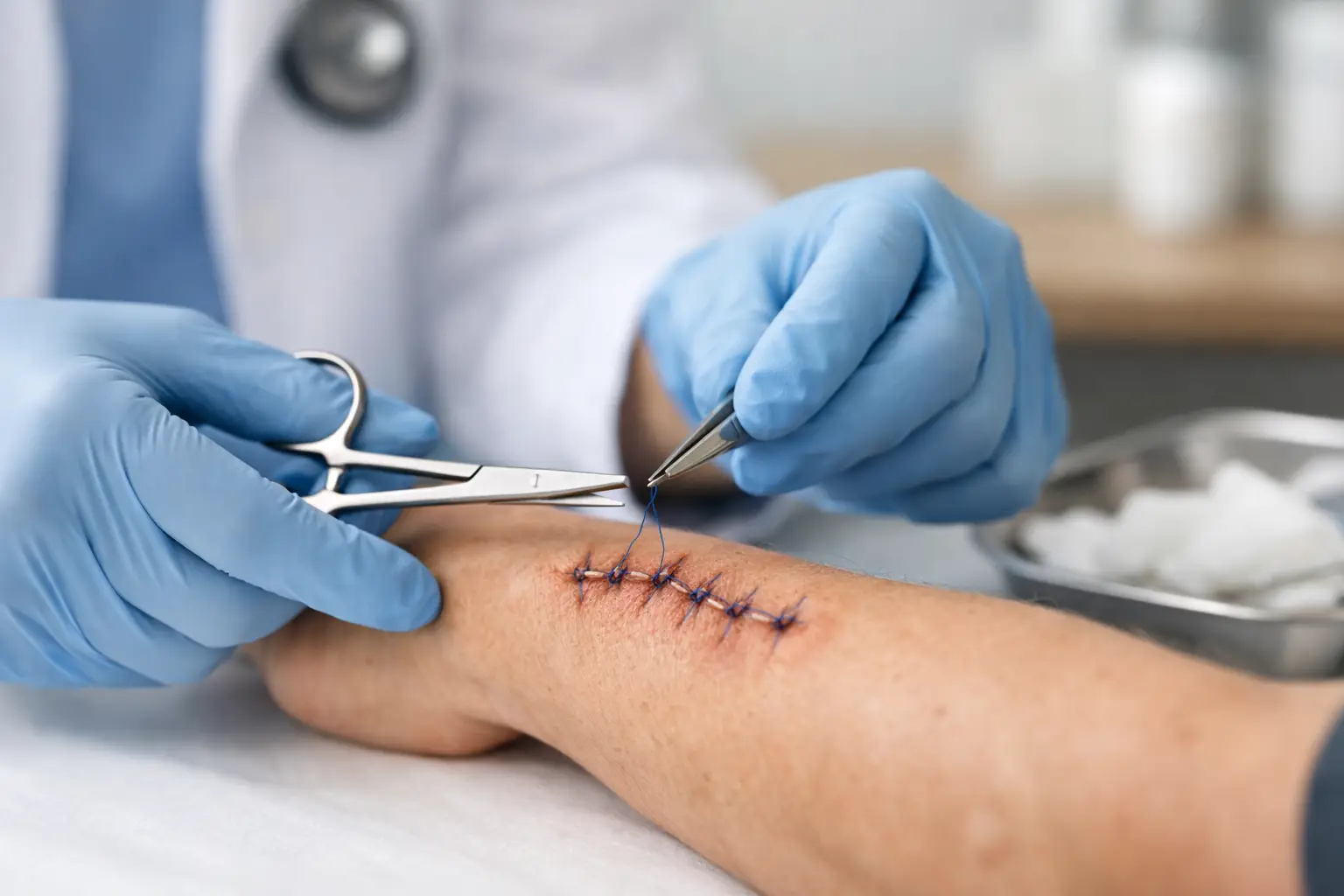
A lot of people ask the same question once a cut starts healing and the follow-up date is coming up fast: can urgent care remove stitches? In many cases, yes. Urgent care can often remove stitches, check how the wound is healing, and make sure there are no signs of infection or delayed closure before they come out.
That said, stitch removal is not always a simple in-and-out visit. The right timing depends on where the stitches are and why you got them. It also depends on how long they have been in place and how the wound looks today. If the area is still pulling apart, draining, or getting more red instead of less, the visit may turn into more of a wound evaluation than a basic removal.
Can urgent care remove stitches in all cases?
Urgent care can remove stitches for many routine injuries, especially cuts that were closed in an emergency room, urgent care, or doctor’s office. This is common for lacerations on the arms, legs, hands, scalp, or other areas that are healing as expected.
But not every set of stitches should come out at urgent care. If your stitches were placed after a surgical procedure, especially by a specialist, you may be told to return to that surgeon for follow-up. Some wounds need a very specific healing plan. Others involve deeper layers, special closure methods, or a decision about whether part of the stitch should stay in longer.
The safest answer is this: urgent care can remove stitches in many straightforward cases, but the provider still needs to assess the wound before removing anything.
When stitch removal at urgent care makes sense
Urgent care is often a practical option when you need same-day follow-up and cannot get in with your primary care office. This is especially helpful for working adults, parents balancing schedules, or anyone who does not want to wait days for a basic wound check.
A stitch removal visit at urgent care usually makes sense when the wound was caused by a minor injury and the healing timeline is on track. It also makes sense if you are not having major problems such as fever, spreading redness, severe pain, or separation of the wound edges.
For many patients, the visit is brief. A clinician looks at the area, checks for healing, removes the stitches if appropriate, and gives instructions about cleaning the skin and limiting stress on the area for a little longer. Even after stitches come out, the skin may still be weaker than normal for several days.
When urgent care may tell you to follow up elsewhere
There are some situations where urgent care may not be the best place for stitch removal, or where the provider may advise a different level of care.
If the stitches were placed after surgery, especially plastic surgery, orthopedic surgery, or a procedure involving the face, eyelid, tendon, or joint, follow-up with the original surgeon may be the better plan. The same is true if the wound needs special scar management. In addition, follow up with the surgeon if the provider who placed the stitches gave exact instructions not to remove them anywhere else.
Urgent care may also defer removal if the wound is not ready. Stitches that come out too early can lead to reopening, delayed healing, or a more noticeable scar. If a wound still looks fragile, some stitches may need to stay in longer. Alternatively, the area may need added support with adhesive strips after removal.
Signs the wound needs evaluation before stitches come out
Sometimes people assume the visit is just for removal. However, what the provider really needs to decide is whether removal is safe that day.
You should expect a closer evaluation if the wound is red, warm, swollen, tender, draining pus, bleeding again, or starting to gap open. Fever, increasing pain, red streaking, or foul odor are stronger warning signs. These should not be brushed off.
There are also less obvious concerns. A wound on a high-movement area like a knee, elbow, finger, or knuckle may look mostly healed but still be under tension. In those cases, timing matters. So does your general health. Diabetes, poor circulation, steroid use, smoking, and immune system issues can all slow healing.
How long do stitches usually stay in?
There is no single timeline that fits every wound. The location matters a lot.
Facial stitches often come out sooner because the skin heals quickly, while stitches on joints or other areas under more tension may stay in longer. Scalp wounds, hand injuries, and cuts on the legs can all follow slightly different timelines. The original discharge instructions are the best starting point, because they reflect the wound type and how it was repaired.
If you do not remember the recommended timing, bring any paperwork you were given. If you do not have it, urgent care can still examine the wound and use clinical judgment. But timing should never be based on guesswork alone. This is especially true if the wound was deep or located in an area that moves a lot.
What happens during a stitch removal visit
Most stitch removal visits are straightforward. The clinician will review when the stitches were placed, where they are located, and whether you have had any issues since the injury. They will look for signs that the skin edges are closed and stable.
If the wound appears ready, the stitches are cut and gently removed. Patients often expect this to hurt more than it does. Usually, it feels like light pulling or a brief pinch rather than sharp pain. If the area is scabbed over or irritated, it may be more uncomfortable, but it is generally quick.
After removal, the provider may place adhesive strips over the wound for extra support. You may be told to avoid heavy lifting, stretching, sports, or soaking the area for a short period. This will depend on where the wound is and how strong the skin looks.
Can you remove stitches at home?
People do it, but that does not make it a good idea.
Home removal comes with a few risks. The most obvious is taking them out too early. Another is missing signs of infection or delayed healing. There is also the chance of leaving part of a stitch behind, introducing bacteria, or causing the wound to reopen.
A clinician is not just removing thread. They are checking whether the wound is truly ready. That matters more than many people realize. In fact, a five-minute visit can prevent a setback that turns a small injury into a bigger problem.
What to bring to urgent care for stitch removal
If you are planning to visit urgent care, it helps to bring the discharge instructions from the original visit if you still have them. A medication list is useful if you are taking antibiotics or blood thinners. It also helps to know the date the stitches were placed. In addition, it is useful to know whether the injury happened at work, at home, or during sports.
If the wound has changed, be ready to describe when that started. For example, if redness increased yesterday or drainage began this morning, that is useful information. Good timing details help the provider decide whether the issue is normal healing, irritation, or a possible infection.
A practical option for same-day care
For many routine wounds, urgent care is a practical place to have stitches removed. It works well for people who need quick follow-up, want the wound checked, and do not need specialist care. In a community built around work schedules, school pickup, and weekend errands, having a walk-in option matters.
Health First Urgent Care sees many of these everyday follow-up needs, including wound checks that seem simple at first but still deserve a clinical look before stitches come out. That extra step is what helps keep healing on track.
When to skip urgent care and go to the ER
Urgent care is the right setting for many non-emergency wound concerns, but not all of them. If a wound has opened widely or is bleeding heavily, a higher level of care may be needed. The same is true if you have severe swelling, significant fever, spreading infection, loss of feeling, or trouble moving the affected area.
The same is true if the original injury involved a deep puncture, a bite, a crushed area, or possible damage to nerves, tendons, or blood vessels. At that point, the issue is no longer just stitch removal.
If you are looking at a healing cut and wondering whether today is the right day to have the stitches removed, the safest move is simple: let a clinician look at it before you decide for yourself.