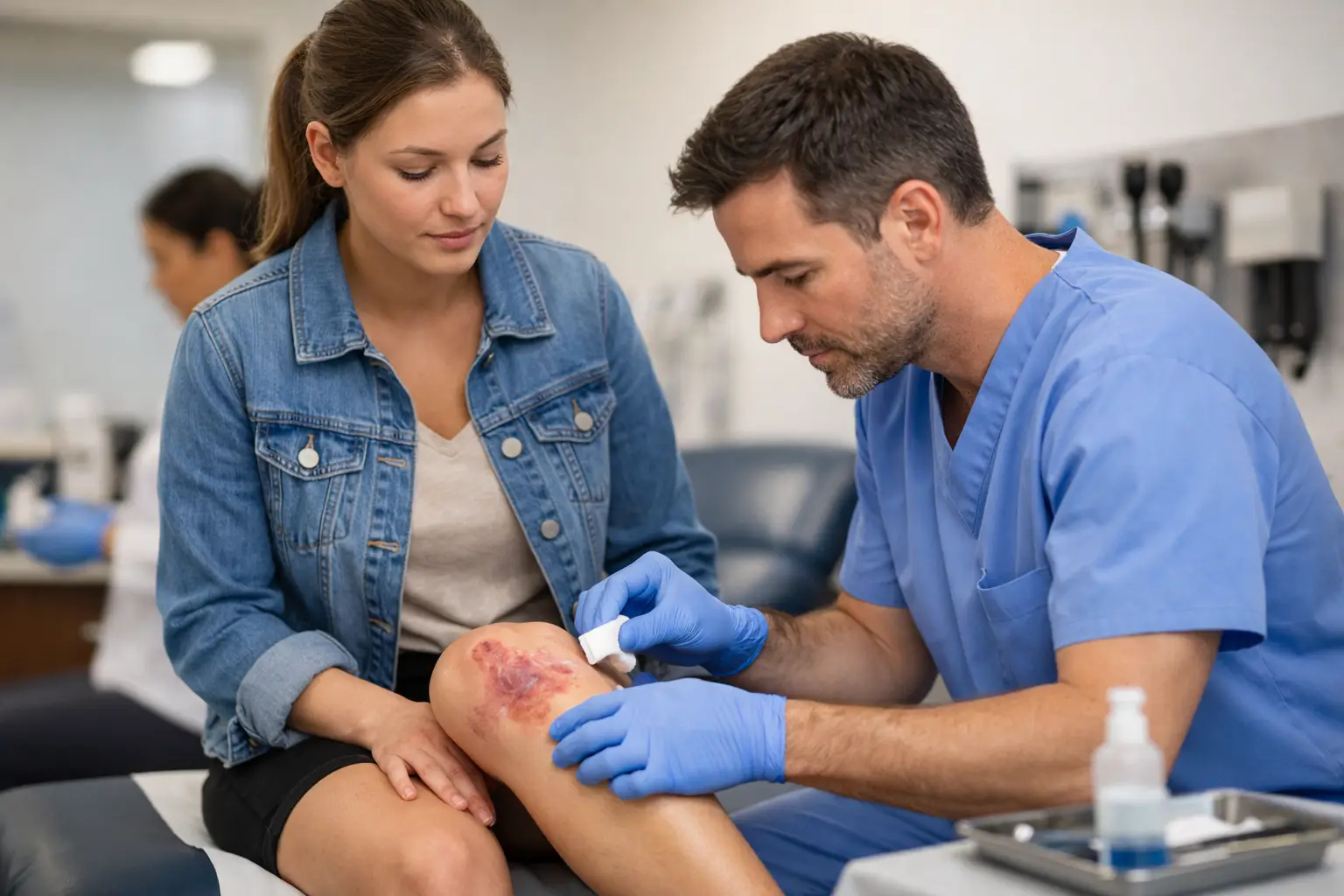
A twisted ankle at soccer practice, a kitchen knife nick that will not stop bleeding, a burn from grabbing a hot pan too fast – this is exactly when minor injury treatment matters. You do not want to guess whether to wait it out, call your doctor, or head somewhere that can actually help right away.
For many everyday injuries, urgent care is built for that middle ground. It is faster than waiting days for a primary care visit. It is also more appropriate than the emergency room for non-life-threatening problems. The key is knowing what counts as minor and what first aid helps before you arrive. Furthermore, you should know what signs mean you should skip urgent care and get emergency help instead.
What counts as minor injury treatment?
Minor injury treatment usually covers injuries that need prompt medical attention but are not immediately life-threatening. That can include sprains, strains, small cuts that may need closure, mild burns, bruises, minor sports injuries, simple fractures in some cases, and work-related injuries that need evaluation.
The word minor can be misleading. A minor injury can still be painful, limit movement, or look worse as the day goes on. A swollen wrist after a fall, a finger slammed in a car door, or a cut that keeps reopening may not be an emergency, but it still deserves proper care. Early treatment can reduce pain, lower the risk of infection, and help you get back to work, school, or normal activity sooner.
When urgent care is a good fit
Urgent care works well when the injury needs same-day attention and the person is stable. If you can walk in, speak normally, breathe comfortably, and the injury is limited to one area, urgent care is often the right starting point.
Common examples include ankle sprains, mild to moderate burns, shallow cuts, puncture wounds that need cleaning, minor head bumps without severe symptoms, muscle strains, and joint pain after a fall or overuse. Parents also use urgent care for playground injuries, bike falls, and sports mishaps that happen after a pediatrician’s office has closed.
This is also practical for many <a href=”https://healthfirstuc.com/services/occupational-medicine/”>workplace injuries. If an employee needs prompt evaluation, documentation, or follow-up instructions, urgent care can often handle the medical side without sending everyone through the ER for an injury that is not severe.
When minor injury treatment should not wait
Some injuries seem small at first and become harder to treat later. Cuts left open too long may not be ideal for stitches or other closure methods. Sprains that are ignored can actually involve a fracture. Additionally, burns that look mild can deepen over time.
That is why waiting to see if it gets better is not always the best move. If swelling is increasing, pain is worsening, bleeding continues, or the injured area is hard to move or put weight on, getting checked the same day is usually the smart call.
There is also a practical reason to act early. A quick evaluation can rule out bigger problems and give you a clear plan for rest, work restrictions, wound care, imaging, or follow-up.
What to do before you come in
The best first step depends on the injury, but simple first aid goes a long way. For cuts, apply steady pressure with a clean cloth or bandage. For sprains and strains, rest the area, use ice, and keep it elevated if possible. For burns, cool the area with running water, not ice, and cover it loosely with a clean dressing.
Try not to make the injury worse on the way in. If a foot or ankle is injured, limit walking. If a finger, wrist, or arm is hurt, a basic wrap or sling may help keep it still. If there is dirt, gravel, or debris in a wound, do not dig aggressively at home. Gentle rinsing is fine, but deeper cleaning is better handled in a medical setting.
If the injury happened at work, bring any employer instructions if you have them. That can make the visit smoother. Especially when documentation or follow-up steps are needed.
What urgent care can do for common injuries
Minor injury treatment is not just a quick look and a bandage. Depending on the situation, urgent care can evaluate pain and swelling. They can clean wounds, close certain cuts, apply dressings, provide splints or wraps, and order imaging when appropriate. Furthermore, they can give guidance on returning to normal activity.
For a sprain, treatment may include an exam to check joint stability, recommendations for bracing, and advice on how long to rest before easing back into work or sports. For a cut, the focus is usually bleeding control, infection prevention, closure if needed, and tetanus review. For a burn, treatment may include wound assessment, cleaning, dressing, and instructions for watching for infection.
That immediate plan matters. A lot of people are less worried about the injury itself than about what comes next. Can you go to work tomorrow? Should your child skip practice for the week? Do you need a recheck? Getting clear answers is often just as valuable as the treatment itself.
Minor injury treatment for kids and active adults
Children and active adults tend to collect the same kinds of injuries over and over – rolled ankles, jammed fingers, scraped knees, wrist pain after falls, and cuts from everyday accidents. Most are treatable in urgent care. However, age and activity level matter.
Kids may downplay pain one minute and refuse to use the arm the next. Adults often do the opposite and try to push through something that needs evaluation. In both cases, function is a good clue. If a child will not bear weight, if a teen cannot grip a bat after a hand injury, or if an adult cannot turn the neck or lift the shoulder normally, it is worth being seen.
There is always some judgment involved. A bruise after bumping into a table is different from a hard fall with swelling that keeps growing. Minor injury treatment is most helpful when it catches the injuries that are not emergencies but are also not likely to improve with wishful thinking.
When to skip urgent care and go to the ER
Urgent care is not the right setting for every injury. Severe chest pain, major head trauma, heavy bleeding that does not stop, loss of consciousness, severe shortness of breath, obvious deformity, deep wounds with exposed tissue, sudden numbness, or suspected spinal injury need emergency care right away.
The same is true for injuries caused by major car accidents, serious falls, or crushing force. If you think the person may be unstable, confused, or in danger of losing function in a limb, the emergency room is the safer choice.
This is the part that depends on symptoms, not just the type of injury. A small cut on the forehead may be urgent care appropriate, while a head injury with repeated vomiting, confusion, or severe headache is not. A sore ankle may be manageable at urgent care. However, a cold, pale foot with intense pain is an emergency.
Why timing and convenience matter
When people search for minor injury treatment, they are usually not looking for a long explanation. They want to know where they can go today, whether they need an appointment, and if the visit will help them avoid a bigger problem tomorrow.
That is where a walk-in model helps. In the Tri-Cities, same-day access matters for parents managing after-school injuries and for workers trying to avoid missing another shift. It also matters to anyone who gets hurt when regular offices are closed. Health First Urgent Care is set up for that practical reality – fast access, seven-day availability, and treatment for common injuries that should be seen sooner rather than later.
Convenience is not just about speed. It is also about reducing the chance that a manageable injury turns into a more expensive and disruptive one because treatment was delayed.
A good rule of thumb
If the injury is getting worse, limiting movement, still bleeding, or raising questions you cannot answer confidently at home, it is reasonable to get it checked. If it is severe, affects breathing, causes heavy blood loss, or involves major trauma, go to the ER.
Most people do not need a perfect medical decision tree. They need a dependable next step. For many everyday injuries, minor injury treatment at urgent care gives you that next step quickly, clearly, and without turning a long day into a longer one.
A small injury can still interrupt your whole week. Getting the right care early is often the fastest way back to normal.